Prefer to talk to a pro?
Call today, and let us connect you with the perfect merchant!
Call today, and let us connect you with the perfect merchant!
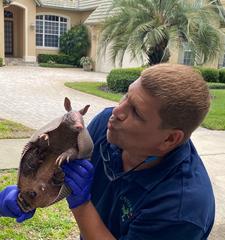
Top Pest Exterminators in Casselberry, FL




Prefer to talk to a pro?
Call today, and let us connect you with the perfect merchant!
Call today, and let us connect you with the perfect merchant!
Want to connect to a local pro?
Let Contractors.com help you.
Related articles

Pest Control Services: Top 3 Things Homeowners Should Consider

Creating a Pest Free Sanctuary

Home Pest Control and Tomato Plants
Updates & tips
Perfluorochemicals Linked With Impulsivity
Perfluorochemicals Linked With Impulsivity Industrial Pollutants: Scientists find that high blood levels correlate with a core feature of attention deficit hyperactivity disorder Children’s exposure to a growing list of industrial chemicals, including certain pesticides and phthalates, has been linked to development of attention deficit hyperactivity disorder (ADHD). Now evidence suggests that perfluorinated chemicals (PFCs) boost ADHD risks by making children prone to impulsive behavior (Environ. Sci. Technol.,DOI: 10.1021/es103712g). Used since the 1950s to make Teflon and many other stain- and water-repellent products, PFCs are now global contaminants. Scientists had already associated elevated PFCs with neurological problems, such as delayed gross motor development. A study published in December found tantalizing links between blood PFC levels and diagnoses of ADHD (Environ. Health Perspect.,DOI: 10.1289/ehp.1001898). Brooks Gump, a psychologist at Syracuse University, wanted to go one step further: He and his colleagues were interested in how the chemicals might affect impulsivity, a core ADHD feature. Impulsivity has cascading effects on so-called “executive functions,” such as planning, verbal regulation, and motor control. ADHD is a complex and multi-faceted diagnosis, Gump notes, that results from deficits in executive functioning. By identifying any influence that PFCs have on impulsivity, Gump hoped to connect the dots between chemical exposure, nervous system effects, and processes leading to ADHD. In the study, Gump’s team asked 83 children ranging from nine to 11 years old to learn and play a computer game without any outside instruction. The game had only one rule: Players must wait at least 20 seconds after pressing a keyboard’s space bar before doing it again. Patient children received a 25-cent reward for each time they hit the space key; more impulsive children who pressed the bar too fast received no reward. “This test measures a child’s ability to put the brakes on responding,” explains Gump. “And measures of response inhibition are directly related to impulsivity.” The researchers also measured PFC levels in the children’s blood using high-performance liquid chromatography/electrospray tandem mass spectrometry. They found that as blood levels went up, the children waited less between button presses. According to Gump, the results hint that PFC levels influence impulsivity. But he cautions that cause and effect are unclear: Children who are more impulsive to begin with may spend more time licking and chewing commercial products, giving them higher exposure to PFCs. “We need to figure out what direction this association goes in,” Gump says, “because if PFCs really do influence impulsivity, then this is an important public health finding.” He noted that every child in the study had PFCs in their blood. Margie Peden-Adams, a toxicologist at the University of Nevada, Las Vegas, commented that Gump’s results were compelling and agreed that teasing out causation is an important next step. She thinks that the next step would be a prospective study that starts by measuring PFC levels in cord and mothers’ blood. “Then we can follow these kids over time, find out who develops ADHD, and link that back to blood measures in kids that go all the way back to prenatal exposure,” she says.
EPA Banning Many Rat Poisons
EPA Takes Major Actions to Reduce Americans’ Risks from Mouse and Rat Poisons / Move will better protect children, pets and wildlife Release date:06/07/2011 Contact Information: Dale Kemery (News Media Only) kemery.dale@epa.gov 202-564-7839 202-564-4355 WASHINGTON– To better protect children, pets and wildlife, the U.S. Environmental Protection Agency announced today that it is moving to ban the sale to residential consumers of the most toxic rat and mouse poisons, as well as most loose bait and pellet products. The agency is also requiring that all newly registered rat and mouse poisons marketed to residential consumers be enclosed in bait stations that render the pesticide inaccessible to children and pets. Wildlife that consume bait or poisoned rodents will also be protected by EPA’s actions.“These changes are essential to reduce the thousands of accidental exposures of children that occur every year from rat and mouse control products and also to protect household pets,” said Steve Owens, assistant administrator for EPA’s Office of Chemical Safety and Pollution Prevention. “Today’s action will help keep our children and pets safe from these poisons.”Children are particularly at risk for exposure to rat and mouse poisons because the products are typically placed on floors, and because young children sometimes place bait pellets in their mouths. The American Association of Poison Control Centers annually receives between 12,000 and 15,000 reports of children under the age of six being exposed to these types of products.In 2008, EPA gave producers of rat and mouse poison until June 4, 2011 to research, develop and register new products that would be safer for children, pets and wildlife. Over the past three years, EPA has worked with a number of companies to achieve that goal, and there are now new products on the market with new bait delivery systems and less toxic baits. These products are safer to children, as well as pets and wildlife, but still provide effective rodent control for residential consumers.While many companies that produce rat and mouse poison products have agreed to adopt the new safety measures, a handful of companies have advised EPA that they do not plan to do so. Consequently, EPA intends to initiate cancellation proceedings under the Federal Insecticide, Fungicide and Rodenticide Act, the federal pesticide law, against certain non-compliant products marketed by the following companies to remove them from the market:· Reckitt Benckiser Inc. (makers of D-Con, Fleeject, and Mimas rodent control products)· Woodstream Inc. (makers of Victor rodent control products)· Spectrum Group (makers of Hot Shot rodent control products)· Liphatech Inc. (makers of Generation, Maki, and Rozol rodent control products)In addition to requiring more-protective bait stations and prohibiting pellet formulations, EPA intends to ban the sale and distribution of rodenticide products containing brodifacoum, bromadiolone, difethialone and difenacoum directly to residential consumers because of their toxicity and the secondary poisoning hazards to wildlife. These rodenticides will still be available for use in residential settings, but only by professional pest control applicators. The compounds will also be allowed for use in agricultural settings; however, bait stations will be required for all outdoor, above-ground uses to minimize exposure to children, pets and wildlife.To help avoid rat and mouse infestations in and around homes, EPA stresses the importance of rodent prevention and identification measures such as:· Sealing holes inside and outside the home to prevent entry by rats and mice· Cleaning up potential rodent food sources and nesting sites· Looking for rat and mice droppings around the kitchen· Keeping an eye out for nesting material such as shredded paper, fabric or dried plant matter· Finding evidence of gnawing and chewing on food packaging or structuresEPA also urges consumers to keep the following tips in mind whenever using rodenticides in their homes:· Always place traps and baits in places where children and pets cannot reach them· Use all products according to label directions and precautions· Be sure to select traps that are appropriate to the type and size of rodent (e.g., rat vs. mouse)More information on rat and mouse products that meet EPA’s safety standard:http://www.epa.gov/pesticides/mice-and-rats
Pest Offense: More Effective & Safer Than Ultrasonic Or Pesticides
By:Sherman Walterson Oct 21, 2010 l 92 views l [-] Text [+] Theres nothing more frustrating than having your home constantly invaded by rodents&pests.; Even the cleanest homes in America can fall victim to mice, ants, roaches, spiders or rats. And there are numerouspest solution devicesavailable on the market, each claiming to be the answer to our prayers. But knowing which is the safest&most effective is where it gets confusing.Our staff recently researched many of these pest control devices & tested the Pest Offense, likely the most popular model on the market with over 5 million units sold. What our testing showed is that while ultrasonic devices & pesticides can help your pest issues, the Pest Offense is much more effective & safer.Here are just a few of the reasons we decided that Pest Offense offers the best value:Customer Reviews: We scoured the web, reading hundreds of testimonials & reviews for various pest control devices. Most ultrasonic device reviews were positive, but there were common complaints about coverage. Just about all of the reviews we read regarding the Pest Offense were overwhelmingly positive. Other competitors, such as the Riddex, had numerous unhappy comments and were also dealing with issues from the (FTC) Federal Trade Commission.University Tested & Approved: Pest Offense is the only pest control device that has been independently tested in an academic research setting. The inventor of Pest Offense turned his invention over to a reputable state university for an intensive 5-year study. The result was an overwhelming stamp of approval.Our Personal Tests: Two members of our staff happened to be having pest issues at home, one with spiders & one with ants. When we installed the Pest Offense units into their homes, the results were almost identical. Initially, over the first few days, their problems seemed to get worse (more critters seemed to surface). But after 7-10 days, both reported that there were virtually no signs of either the ants or the spiders. And that continued to be the case for the next several weeks. Two very enthusiastic thumbs up!Cost & Coverage: One of the biggest downfalls to using an ultrasonic sound pest control device is the units typically cover only a limited amount of space within the home, usually one room. So if you need to cover a large area you'll need to place a number of different units around the house, which could become costly. Pest Offense, on the other hand, only requires one unit to cover one level of an average home with a single connected circuit panel. And since it relies on the electrical wiring of the home to annoy pests rather than sound, coverage is much better. You would need two units, however, if you have two floors that have ground access (such as a basement home).No Pesticides or Chemicals: If you have children with health issues such as Asthma, then you know how risky pesticides & chemicals can be to use. Additionally, there are proven links of indoor pesticides to Leukemia, Parkinsons disease, ADHD & other cognitive development deficiencies. Why take the risk?It is important to note that you should not use Pest Offense, or any other electronic or ultrasound pest device, if you have small pets such as a hamster, gerbil, guinea pig or any other rodent-type animal. These small pets will be effected.So based on our research, personal tests, other testimonials & the Pest Offense having a product-return rate of less than percent,Pest Offense, appears to be the best and most reliable pest control device on the market.xml version='1.0' encoding='%SOUP-ENCODING%' Author Description : Sherman Walters is President ofShopAtAsSeenOnTV.com, the Internet's most trusted source for As Seen on TV infomercial products. He and his staff routinely reviewnew infomercial productsfor their customers and post those reviews online. Article Source:http://lifestyle.ezinemark.com/pest-offense-why-electronic-pest-control-is-more-effective-and-safer-than-ultrasonic-or-pesticides-3194dd73a34.html Read more:http://lifestyle.ezinemark.com/pest-offense-why-electronic-pest-control-is-more-effective-and-safer-than-ultrasonic-or-pesticides-3194dd73a34.html#ixzz137T6mGpGUnder Creative Commons License:Attribution No Derivatives