
Best Use of Bounding Box Annotation in Machine Learning
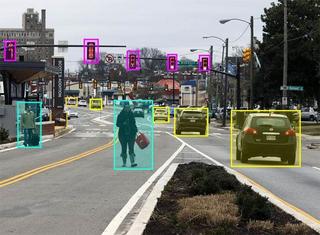
In an image, bounding boxes illustrate a potential region of interest (ROI). Every feature recognition/detection algorithm, in general, delivers the ROI in the form of pixel coordinates, width, and height. We commonly write our technique to draw boxes using the initial coordinates and the width and height (in pixels).
In computer vision, bounding boxes are the most prevalent sort of annotation. Bounding box machine learning is rectangular rectangles that specify where the target item is located. The x and y-axis coordinates in the upper-left corner and the x and y-axis coordinates in the lower-right corner of the rectangle can be used to determine them. Object recognition and localization tasks frequently employ bounding boxes in machine learning.
Bounding Box Machine learning Applications
What are some of the most prevalent applications of bounding box deep learning?
Object Localization for Self-Driving Cars: Bounding boxes are commonly used in training self-driving vehicle vision models to recognize road objects, such as traffic signals, lane barriers, and people, among other things.
Object Detection in Ecommerce or Online Shopping:
Things sold online are labeled with boundary boxes to help purchasers remember what clothing or other accessories they're wearing.
Car Loss Detection for Insurance Claims: Bounding box annotated photos may be used to track vehicles such as automobiles, bikes, and other cars that have been damaged in an accident. Machine learning models trained using bounding boxes deep learning may learn the severity and location of losses to anticipate the cost of litigation, allowing a client to submit an estimate before filing a case.
Also Read: Exploring Bounding Box for Image Annotation
Indoor goods such as beds, desks, seats, cupboards, and electrical gadgets are detected by bounding boxes. It allows computers to obtain a feeling of space and the kind of stuff out there and their location and dimension, making it easier for the machine learning model to recognize such items in a real-world context.
Target Detection Using Robotics and Drone Imagery: Image annotation is widely used to mark things from the perspective of robots and drones. Using images tagged using this technology, autonomous equipment such as robots and drones can categorize various items on the globe.
Creating bounding boxes
The following are the attributes of a Bounding Box machine learning:
Height – The bounding box's height percentage of the total picture height.
Left: The bounding box's left coordinate is expressed as a percentage of the entire picture width.
Top – The bounding box's top coordinate is a percentage of the full picture height.
The width of the bounding box is expressed as a percentage of the whole picture width.
The value of each Bounding Box attribute is between 0 and 1. Each property value is a percentage of the total picture width (Left and Width) or height (Height and Width) (Height and Top).
It would be best to multiply the Bounding Box values by the picture width or height (depending on the weight you desire) to acquire the pixel values to display the bounding box with the correct position and size. The bounding box is displayed using pixel values.
Bounding boxes are helpful in many areas of Object detection.
In terms of bounding boxes, how does object detection work? Consider object detection as a two-part process: object classification and object localization. To put it another way, before a computer can recognize something in a photograph, it must first grasp what it is and where it is.
Consider self-driving autos as an example. Other automobiles will be labeled, and an annotator will draw boundary boxes around them. This assists in the training of an algorithm to recognize vehicle appearances.
Autonomous vehicles can safely traverse busy streets by annotating items like cars, traffic signals, and people. Self-driving car perception models rely heavily on bounding boxes to make sense of the surroundings.
This post is originally published at Click here

