
Tree Removal: How Do Laws Vary Around The World?
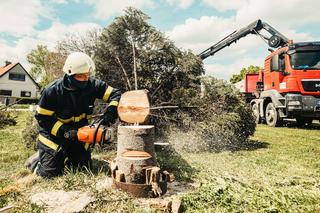
For millennia, trees have been chopped down by human beings - often to harvest timber, but sometimes simply to make way for buildings or roads or other infrastructure.
The mass removal of trees has had global consequences. Not only have many animals that live in trees become endangered, but our Earth’s atmosphere has also been altered, leading to climate change. Trees are a major source of oxygen and help absorb large amounts of carbon dioxide, and deforestation has offset carbon and oxygen levels in the air.
Because of this, nations around the world have put in laws to control the felling of trees. This is not the only reason such laws exist - trees can provide shade, privacy and noise reduction in certain areas. On top of this, removing trees can be dangerous work, and so laws have to be put in place to make tree removal safe.
While some organizations like the Forest Stewardship Council (FSC) and Greenpeace try to control tree felling on a global level, it is largely up to individual nations as to what laws are put in place. These vary around the world, as this article delves into.
Permits
Many countries require landowners to apply for permits in order to remove a tree. Countries like the UK require applications to local authorities and charge fines of up to £20,000 for unauthorized tree removal. Brazil’s permitting is meanwhile rigorous - especially in the Amazon, where quotas are set by IBAMA and environmental impact assessments must be carried out before each removal.
Other countries or states aren’t so strict when it comes to permit requirements or have proven to be lax when giving them out. Certain states and cities in the US have been criticised for not requiring a permit at all in many areas. In 2017, Poland tried to eliminate the need for landowner permits, but was met with backlash leading them to resume the need for permits. In other countries like Israel, permits are technically required, but are granted liberally, leading to criticisms of them being ineffective by some citizens.
Protected trees
Certain species of trees are sometimes protected. This means that it is illegal to remove them unless under certain circumstances (such as posing a danger). Such trees may be protected due to being critically endangered (such as the wollemi pine in Australia and the ziyuan fir in China) or due to being critical in supporting local wildlife (such as oak trees in California).
Trees are also sometimes protected due to their age - remarkably old trees are seen as pieces of history to preserve. Trees may also be protected in certain areas in order to promote wildlife or natural beauty (often known as conservation areas). This is typically the case in national parks around the world such as the New Forest in the UK.
There has been criticism of tree protection in some countries and areas. For example, laws governing the felling of trees has had negative impacts on some indigenous peoples that still depend on trees for resources. There have also been cases of tree protection being ignored in some countries (Brazilian Mahogany is illegal to log in Brazil, and yet new products made from ‘green gold’ continue to be sold in global black markets - partly due to an increase in rarity).
Canopy goals
In several cities around the world, canopy goals are sometimes put in place to ensure that a certain amount of urban tree cover is retained. This can influence removal laws, as well as requiring removed trees to be replaced in some cases.
The USA has several ambitious programs; Seattle aims for 30% canopy by 2037, which has led to tighter restrictions on the removal of trees. In Wellington in New Zealand, a similar push for 30% canopy has been proposed. London’s canopy goal of 10% by 2050, has meanwhile recently been adjusted to 23% in a bid to be greener.
There have been some complaints regarding canopy goals, suggesting that they are unrealistic or that the planting of new trees is not keeping up with the removal rate in some areas. However, the goals have mostly been successful at increasing tree plantation and limiting tree felling in urban areas. Singapore, for example, has met its benchmark.
Hiring professionals
Who is allowed to cut down a tree? While in most countries there are no laws against buying a chainsaw (aside from age restrictions), it is worth checking whether you are legally allowed to cut down a tree without obtaining certification.
DIY removal of small trees on private land is allowed throughout most of the USA, however large trees and trees on public land often can only be felled by a certified professional. Protected species in states like California also must be inspected and cut down by a licensed arborist. Similarly, the UK requires TPO work to only be carried out by tree surgeons who are verified by local councils.
It is important to always look into local laws to be certain that you have the right to cut down a tree yourself. Small trees will usually not be a problem, but it is important to look into what is considered a small tree.
Of course, despite these laws, many people around the world continue to ignore them. This is thought to be the case with much of the illegal logging trade across the world - such companies hire anyone to fell trees and as a result accidents are more common.
Conclusion
Tree removal laws around the world form a complex tapestry with different countries having a different ethos to environmentalism, safety and approval. There do seem to be some encouraging crackdowns across the world - particularly in countries like Brazil where deforestation has a huge impact on the country’s ecosystem. But this hasn’t completely prevented illegal logging. Bureaucracy failings and ignorance of the laws has also resulted in people continuing to remove trees. And despite an increase in the planting of new trees, the world is still losing more trees than it is gaining each year (although net gains have been reported in some countries such as China, India, Germany and Uruguay.


