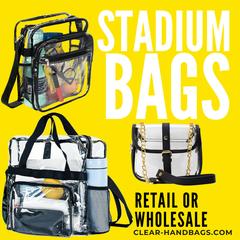
Workplace Reasons for Requiring Clear Employee Bags
In recent years, more companies have adopted clear bag policy mandates for employees—requiring staff to carry employee clear bags rather than opaque purses, backpacks, or handbags. This change reflects a stronger focus on security, loss prevention, and operational visibility at work. Why are these rules becoming more common, and how can companies or staff pick clear bags that meet requirements without losing style or functionality?
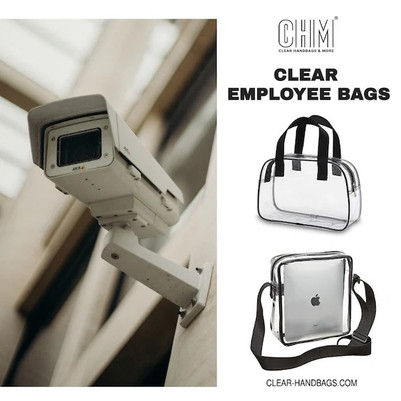
Below, we explore the key reasons behind workplace clear bag policy and provide tips on choosing the ideal employee clear bag.
Why Do Workplaces Adopt a Clear Bag Policy?
1. Security & Threat Mitigation
One of the primary motivations for adopting a clear bag policy is enhanced security. Plastic clear tote bags allow security personnel or supervisors to conduct quick visual inspections without opening every bag. This reduces the risk of concealed weapons, contraband, or unauthorized items entering restricted areas.
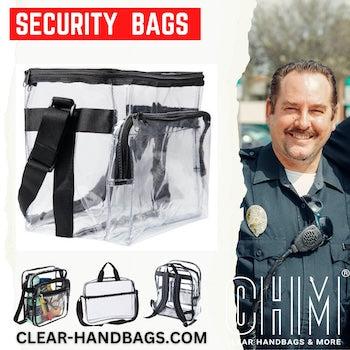
In environments with elevated risk—manufacturing floors, warehouse operations, airports, or offices with valuable equipment—transparent bags can help deter wrongdoing; airports frequently mandate clear security bags for staff entering restricted zones to streamline checks.
2. Theft Prevention and Loss Control
Workplace theft—whether petty or significant—can pose a serious cost burden. Mandating employee clear bags can help deter internal theft, as transparent bags make it harder to conceal stolen items. Some businesses report that the mere presence of a clear bag policy fosters more accountability.
In retail, hospitality, and busy customer-facing spaces, staff belongings are more exposed and monitored, which helps clarify the line between customer and employee property.
3. Streamlined Inspections & Efficiency
When bags are opaque, security officers or supervisors are forced to open each one, sift through the contents, and then repack everything, a process that consumes time and interrupts normal operations. Under a clear bag policy, visual inspections can replace full searches, making checks quicker and less invasive while creating a more consistent and predictable routine for both employees and management.
In settings with frequent comings and goings—such as stadiums, manufacturing plants, or retail stores—this improved pace helps prevent bottlenecks and keeps workflows moving smoothly.
4. Standardization and Fairness
A clear bag policy ensures all employees are held to the same standard. There’s less ambiguity about what can or cannot be carried—since all contents are visible. This consistency helps reduce disputes over inspections and reinforces fairness across staff.
5. Compliance & Industry Trends
Many large-scale venues and institutions already require clear bags—for example, sports stadiums, concert halls, and schools. As those norms spread, workplaces may adopt similar clear bag policy rules to align with broader security expectations.
Additionally, some industry sectors (like aviation or government) already implement strict bag screening and may extend those rules to non-passenger staff.
Ethical Considerations of Clear Bag Policies
Adopting a clear bag policy at work goes beyond selecting bags; it requires consideration of employee rights, privacy implications, and applicable labor laws.
Employee Privacy vs. Employer Interests
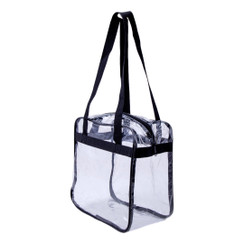
Employees typically retain a reasonable expectation of privacy regarding personal items such as purses or backpacks. For employers to carry out searches or enforce a bag policy, the rule must be clearly communicated, applied uniformly, and supported by legitimate business reasons.
Employers can conduct “reasonable searches” provided they are not discriminatory and are within scope.
Compensation for Bag Inspections Time
If a clear bag policy requires mandatory bag inspections or exit checks, employees must be paid for that time in certain jurisdictions. For instance, the California Supreme Court has held that time spent waiting for and undergoing employer-mandated bag searches is compensable work time, even when employees use their own bags.
Consequently, employers need to design inspection procedures that minimize unpaid delays and align with applicable wage-and-hour laws.
Disclosure & Notice (not legal advice but recommendation)
To avoid legal pitfalls, employers should clearly document a clear bag policy in employee handbooks or policy manuals. Employees should be informed in advance and ideally consent to the rules.
What to Look for in an Employee Clear Bag
If your workplace has decided to adopt or standardize a clear bag policy, here’s how to choose a quality employee clear bag that balances security, usability, and employee acceptance.
1. Material & Transparency
The bag should be made from high-clarity PVC, TPU, or other non-porous plastic materials that allow contents to be easily seen without distortion. Avoid frosted or tinted options.
Thicker gauges (e.g. 0.5 mm or higher) help with durability and prevent tearing at seams.
2. Size & Dimensions
Many clear bag policy guidelines limit size. A common specification (in other contexts) is 12″ × 6″ × 12″ (stadium approved size), with larger but still bounded sizes (e.g. 18″ × 18″) for totes or backpacks.
In a workplace, you’ll want to define your own size cap — large enough to carry essentials (lunch, small laptop, keys) but small enough to avoid bulk.
3. Zippers & Metal Detectors
Choose full-zip or lockable zippers to prevent opening mid-shift. Strong stitching, reinforced edges and solid seams help the bag last through daily use.
Most bags will not have a problem with metal detectors however you may also want to consider velcro closure depending on the level of security.
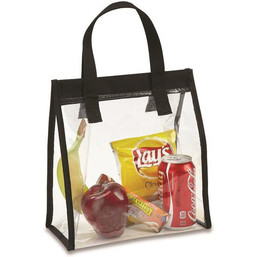
Metal-Free!
This clear work bag contains no metal, making it ideal for secured facilities that utilize metal detectors.
4. Organizational Pockets & Privacy Inserts
While full transparency is required, many policies allow a small opaque “privacy pouch” inside the clear bag—for items like medicine or sensitive documents. Make sure the design accommodates this while remaining inspectable.

Internal compartments or zippered mesh pockets can also help employees stay organized without sacrificing visibility.
5. Comfort & Branding
If your employees must carry these all day, comfort matters. Adjustable straps or handles, lightweight design, and padded elements make usage more tolerable. Transparent bags can also be subtly branded (e.g. clear bag with logo) to help your company’s identity shine through without undermining the security principle.
6. Compliance Documentation & Testing
Test the chosen employee clear bags with your security team before launch; verify that lighting and viewing angles provide full visibility, keep sample bags as reference standards, and record that the selected bags comply with your internal or industry clear bag requirements.
Tip: Get your employee bags imprinted with your company logo this way it is an easy way to identify approved bags. Logo imprints on orders of 50+ bags.
Best Practices for Rolling Out a Clear Bag Policy at Your Company
- Communicate Early & Clearly
- Share policy details well in advance. Explain why the company is implementing clear bag policy, how inspections will work and what bag specs employees need.
- Pilot Program
- Start with a small department or shift to test the flow, catching bottlenecks and employee feedback early.
- Supply or Subsidize Bags
- Provide one or more company-approved employee clear bags (or offer a discount) so employees don’t have to bear full cost.
- Train Inspectors & Supervisors
- Consistency in inspection is key. Train security or managers so inspections are conducted uniformly and respectfully.
- Address Privacy Exceptions
- Establish procedures for medical necessity, employee sensitivities, or items employees legitimately need to shield. Use small privacy pouches only when necessary and inspectable.
- Review & Adjust
- Monitor for delays, employee complaints, and pockets of resistance. Be willing to fine-tune size limits, bag features, or inspection processes.
10 Steps For Implementing a Clear Bag Policy
Final Thoughts
Adopting a clear bag policy for employees may feel restrictive initially, but when implemented thoughtfully it delivers clear advantages: stronger security, fewer thefts, faster inspections, and greater accountability. Choosing durable, compliant clear bags and rolling out the policy with openness and care helps organizations safeguard assets while preserving positive relations with staff.
If you’re looking for workplace-grade transparent bags that meet rigorous standards and look professional too, check out clear-handbags.com. Our collection features durable PVC sizes that satisfy even stricter bag protocols. (And yes, we welcome bulk orders from companies implementing new policies.)
This content is for informational purposes only and does not constitute legal advice.
Contact us:
Clear Handbags & More
1860 SW Fountainview Blvd #1033
Port St. Lucie, FL 34986
1-800-881-4880
customerservice@clear-handbags.com

