
A Review of Clock Inserts Designs
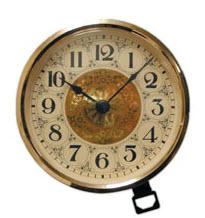
Clock inserts styles are nearly as differed as those for the full range of parts readily available, despite the fact that with much decreased self-reliance. Designs in clock inserts tend to be well matched and complementary, hopefully tasteful, because the user has to approve whatever as a plan. We utilize this short article to review what a clockmaker will certainly locate when thinking about buying a fit-up (insert) in contrast to constructing a collection of individually selected parts right into a single wrist watch.
Clock inserts designs cover all the pertinent parts, the hands, the dial, and also even the additionals including bezel as well as lens. What one is compelled to do is consider style around the world or hierarchically as a system rather than separate attributes that function well together (or perhaps, regrettably, clash. It's an especially convenient method to clock building when the emphasis is more on the (creative) structure than on the watch itself.
Though you can not select private elements, the inserts a distributor markets do vary noticeably in regards to capability, style, and size. The design aspect, which is the emphasis of this article, can be more classified regarding tint selections, product selections, the look of the numerals, and also the appearance of the hands.
As an example, dials can be found in many different history colors varying from black to silver to gold to ivory to white. The numerals as well as the hands normally complement each other with comparable styling such as an antique or contemporary look, and are made to comparison well against the dial history. Furthermore, numerals might be printed in Roman, Arabic, or Fancy versions of each.
For size choices, your distributor will most likely furnish a series of 6 to 8 choices in between about one-and-a-half inches in diameter and also eight-and-a-half inches. The procedure represents the clock face size (plus bezel), as well as the mounting hole will certainly be approximately an eighth-inch to a quarter-inch smaller sized. Thus, the fit-up is (normally) mounted from the front and the bigger dial holds it in position against the structure.
Option (if any type of) of products tends to be amongst brass, stainless steel, as well as black plastic. This is what is made use of for the insert body (even though usually undetected) and also perhaps for the bezel. The lens is most often made of acrylic, though sometimes you will discover glass.
The dimension constraints from the provider mean that the clockmaker may need to be versatile, going either bigger or smaller than what she would certainly take into consideration suitable. Then pay attention to the guidelines for exploration that should come with the insert. These will prove important in obtaining an opening in the frame that results in a tight fit.
Certainly, one could utilize this technique to develop timepieces from scratch, making use of whatever preferred for the framework. However the more common objective is to refurbish or change a no-longer-functioning clock that belongs to an antique or otherwise wanting to frame. In such a situation the quickest course to success is to select an insert.
We mentioned that the insert normally installs from the front, but occasionally the builder favors rear mounting so as to reduce detraction from the framework. Such inserts are different pets and you may have trouble finding sufficient of a choice. You likewise have to make the front opening a bit smaller than the back so that the clock is held in place.
Incidentally, expect your insert to be battery powered. The battery dimensions often tend to be proportional to the insert's diameter. You'll discover designations such as AAA, AA, as well as others.
Utilizing fit-ups allows a clockmaker to produce an intriguing watch with little effort or time. Looks may not be exactly what one wishes, though the option is generally wide enough to discover something suitable. The viewers should now know what to expect in regards to clock inserts designs.


