
Adversarial Example Generation: Revealing Hidden Fragility
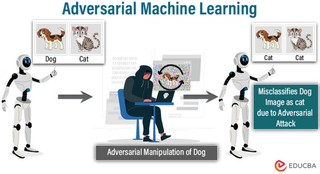
Imagine a master painter who can perfectly recreate any scene—until someone slightly shifts the lighting, and suddenly, the artist’s perception falters. That’s what adversarial examples do to artificial intelligence (AI). They exploit the smallest imperfections in a model’s understanding of the world, revealing just how fragile even the most advanced systems can be.
Adversarial example generation is more than a clever trick—it’s a stress test for machine learning models. It’s the process of crafting subtle, almost invisible changes to input data that can cause AI systems to make dramatically incorrect predictions. By exploring this landscape, researchers can make models safer, more transparent, and better prepared for real-world challenges.
Understanding the Art of Adversarial Generation
At its heart, adversarial generation is like creating an optical illusion for machines. The image or data might look identical to humans, but to an AI, it sends an entirely different signal. These crafted inputs—often images, sounds, or text—are designed to confuse neural networks by slightly altering key features the model depends on.
For instance, a photo of a stop sign with a few strategically placed stickers might cause an autonomous vehicle’s vision system to mistake it for a speed-limit sign. The implications are huge—not just for road safety but for cybersecurity, healthcare, and finance, where AI systems are being trusted with sensitive decisions.
Professionals eager to understand these techniques in depth can explore gen ai training in chennai, where such real-world case studies form the foundation of learning how to build models resilient to deceptive data.
Generative Models: The Creators of Deception
Adversarial examples often come from generative models—networks that can produce realistic variations of input data. Techniques like Generative Adversarial Networks (GANs) and Variational Autoencoders (VAEs) are commonly used to create synthetic but convincing “attacks” that test the model’s limits.
Think of this as a game between two artists: one creates near-perfect forgeries, and the other learns to spot them. Over time, both improve—the generator learns to fool, and the discriminator learns to detect. This push-and-pull dynamic mirrors real-world cybersecurity, where offensive and defensive capabilities evolve together.
The beauty of generative approaches lies in their creativity. They don’t just break systems—they help strengthen them by revealing where blind spots exist, forcing engineers to rethink assumptions about what their models truly “understand.”
Defensive Learning: Teaching Models to See Clearly
To build resilient AI systems, researchers employ techniques such as adversarial training, gradient masking, and feature smoothing. These methods expose models to adversarial examples during training, improving their ability to distinguish genuine inputs from manipulated ones.
It’s like preparing a pilot for turbulence before the first flight. By experiencing uncertainty in controlled environments, AI models learn to maintain composure in unpredictable situations. However, this defence is a continuous journey—new types of adversarial attacks emerge constantly, requiring adaptive learning and model vigilance.
Learners engaging in gen ai training in chennai often experiment with these defence mechanisms firsthand, using tools like TensorFlow and PyTorch to simulate attacks and develop strategies to mitigate them effectively.
Ethical Dimensions: Testing vs. Tampering
While adversarial generation is valuable for improving AI security, it also raises ethical questions. At what point does testing cross into tampering? The same techniques used for research can, in the wrong hands, be weaponised to mislead systems intentionally.
This dual-use nature makes governance and ethical guidelines essential. Developers must ensure transparency in their testing processes and share insights responsibly. Collaboration across academia, industry, and policy institutions is vital to balance innovation with security.
Conclusion
Adversarial example generation reminds us that intelligence—human or artificial—is never infallible. These small, strategic perturbations expose vulnerabilities, prompting the AI community to design models that are not only accurate but also robust and trustworthy.
As generative AI continues to shape modern innovation, the ability to understand and defend against adversarial manipulation becomes a cornerstone of responsible development. For those stepping into this evolving field, mastering these principles through structured learning can make the difference between building fragile systems and creating resilient, future-ready AI.


