
Stainless Steel Casting Overview
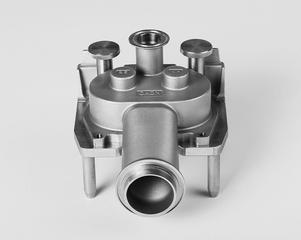
Stainless steel casting is a widely used manufacturing process in which molten stainless steel is poured into a mold to create various shapes and components. This process is often used to produce complex parts that would be difficult or costly to create through other methods. Stainless steel casting is known for its precision, durability, and corrosion resistance, making it a popular choice in industries such as automotive, aerospace, marine, and more.
CFS Foundry is a professional stainless steel foundry, we can make cast stainless steel parts in different alloys, including: 304, 304L, 316, 316L, 17-4ph, 2205 duplex, etc.
Our stainless steel investment casting process involves several steps:
- Pattern Creation: A pattern, typically made of wood, plastic, or metal, is created in the shape of the desired final product. This pattern is used to create the mold.
- Mold Making: The pattern is used to create a mold by packing sand, ceramic, or other refractory materials around it. The mold is designed to withstand the high temperatures of the molten stainless steel.
- Melt Preparation: Stainless steel, which is an alloy of iron, chromium, and other elements, is melted in a furnace. The alloy composition can be adjusted to achieve specific properties like hardness, corrosion resistance, and more.
- Pouring: Once the stainless steel is molten and the mold is ready, the liquid metal is poured into the mold cavity. This requires precision to ensure that the metal flows evenly and fills the mold completely.
- Solidification and Cooling: The poured metal starts to solidify and cool down within the mold, taking on its final shape. Cooling rates and techniques can affect the microstructure of the stainless steel and, consequently, its properties.
- Mold Removal: Once the metal has solidified and cooled, the mold is broken or removed to reveal the cast stainless steel component.
- Finishing and Machining: The casting might require additional finishing steps, such as grinding, polishing, or machining, to achieve the desired surface finish and dimensional accuracy.
Stainless steel casting offers numerous advantages, including:
- Design Flexibility: Complex shapes and intricate details can be easily achieved.
- Material Properties: Stainless steel offers excellent mechanical properties, corrosion resistance, and temperature resistance.
- Cost-Effectiveness: It can be a cost-effective way to produce small to medium quantities of parts.
- Reduced Waste: The process generates less waste compared to traditional machining methods.
- Shorter Lead Times: Casting can often reduce the time required to produce certain components.
However, there are also some considerations to keep in mind:
- Tolerances: Achieving tight tolerances may be challenging with casting.
- Surface Finish: The surface finish of cast parts might not be as smooth as parts produced through other methods.
- Size Limitations: There might be limitations on the size of parts that can be cast effectively.
- Tooling Costs: Creating patterns and molds can incur upfront costs.
In conclusion, stainless steel casting is a valuable manufacturing process that offers versatility, durability, and corrosion resistance. It's commonly used across various industries to create intricate and durable components. Any inquiry on stainless steel casting, pls contact our stainless steel foundry.


