Prefer to talk to a pro?
Call today, and let us connect you with the perfect merchant!
Call today, and let us connect you with the perfect merchant!
About Delmar, DE
Delmar is a town in Sussex County, Delaware. Its motto is "The Little Town Too Big for One State." It is part of the Seaford, Delaware Micropolitan Statistical Area. The largest area school is the Delmar Senior High School. One of the most popular places to visit is the Old Mill Crab House. A famous person from Delmar is William Alland, an actor.
Best Businesses in Delmar, DE



Prefer to talk to a pro?
Call today, and let us connect you with the perfect merchant!
Call today, and let us connect you with the perfect merchant!
Related articles
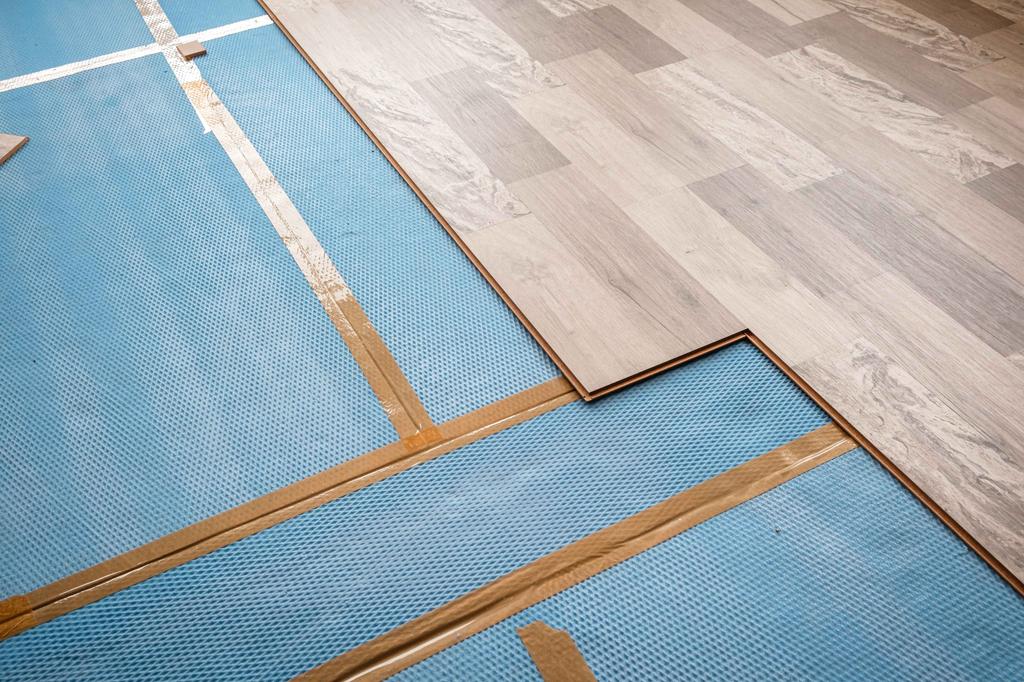
How to Fix Squeaky Floors: Easy DIY Solutions That Actually Work

Landscaping Gravel Types: Pros and Cons

How to Clean Hardwood Floors: Simple Steps for Long-Lasting Shine
Updates & tips
Autel EVO Lite 640T Enterprise Lightweight and Thermal drone
In a growing number of industries, drones have evolved from imaging tools to productivity tools. From building inspections to emergency search and rescue, to energy monitoring and security management, a powerful enterprise-grade drone can significantly improve efficiency and safety. Today, we recommend theAutel EVO Lite 640T Enterprise—a dual-mode drone that combines portability with professional performance. Why choose the EVO Lite 640T Enterprise? 1. Lightweight and portable, ready for deployment at any time The EVO Lite 640T Enterprise features a foldable design, weighing less than 1 kg. Whether in an engineer's backpack or a rescuer's gear case, it easily fits, enabling one person, one drone, and rapid deployment. 2. Thermal + Visible Light Dual-Mode Camera It features a built-in 640×512 resolution thermal imaging camera and a 48-megapixel visible light camera, which can simultaneously record images, enabling split-screen and fusion modes. Thermal imaging allows you to "see" temperature differences at night, in smoke, or in complex environments. During daytime operations, visible light provides clear details. This is especially critical for building inspections, fire monitoring, and search and rescue missions. 3. Long Flight Endurance and Stable Image Transmission With a flight time of up to 40 minutes, and equipped with the SkyLink image transmission system, HD image transmission can reach up to 12 kilometers in open air. Whether inspecting large power areas or searching vast forests, there's no need to frequently change equipment. 4. AI Intelligent Recognition and Three-Way Obstacle Avoidance Equipped with AI target recognition, it quickly locks onto objects such as people and vehicles, improving mission efficiency. Adding forward, backward, and downward obstacle avoidance, it allows for safe flight even in complex terrain or urban environments. 5. Professional Application Functions Multi-mode temperature measurement: spot, area, and line measurement, quickly detecting temperature anomalies; Various thermal imaging color palettes: Ironbow, White Hot, Rainbow, etc., convenient for use in different scenarios; Mission Planning and Data Management: Supports multi-platform software access for easy analysis and sharing of results. Application Scenarios Building and Energy Inspection: Detect hot spots in circuits, solar panel failures, and roof leaks. Public Safety and Search and Rescue: Fire, night search, and post-disaster rescue. Security and Law Enforcement: Border patrol, large-scale event security, and forest fire prevention monitoring. Environmental Monitoring and Scientific Research: Wildlife surveys and wetland heat distribution monitoring. Summary The Autel EVO Lite 640T Enterprise is an enterprise-grade drone that combines portability, professionalism, and intelligence. It not only meets the needs of daily inspections and emergency response missions, but also brings higher efficiency and safety to various industries. If your team needs a drone that can see more, fly longer, and operate smarter, the EVO Lite 640T Enterprise is a reliable choice.
Quadcopter drone: the perfect fusion of technology and the future
Quadcopter drone (Quadcopter), as one of the representatives of modern technology, is changing our lifestyle at an astonishing rate. From aerial photography to logistics and transportation, from agricultural monitoring to disaster relief, the application scenarios of quadcopter drones are becoming more and more extensive, and the technological innovation and potential behind them are exciting. This article will take you to an in-depth understanding of the principles, applications and future development trends of quadcopter drones. The basic principle of quadcopter drones A quadcopter drone is a flying device driven by four rotors. Its design is inspired by helicopters, but it achieves more stable flight through four symmetrically distributed rotors. Each rotor is driven by an independent motor, and the lift, pitch, yaw and roll of the drone are controlled by adjusting the speed. autel quadcopter drones Core Technology Flight Control System: The flight control system is the "brain" of the drone, integrating sensors such as gyroscopes, accelerometers, and magnetometers for real-time monitoring and adjustment of flight attitude. Advanced flight control algorithms (such as PID control) ensure the stability of the drone in complex environments. Power System: High-efficiency brushless motors and electronic speed regulators (ESC) power the rotors, while lithium batteries are the energy source for drones, with a flight time of usually 15-30 minutes. Communication System: Communicate with the ground controller via radio or Wi-Fi. Some high-end drones support GPS and visual positioning systems for precise navigation and autonomous flight. Sensors and Cameras: Equipped with high-definition cameras, infrared sensors or lidars, quadcopter drones can complete tasks such as aerial photography, mapping, and obstacle avoidance. Wide Application of Quadcopter Drones The flexibility and versatility of quadcopter drones make them shine in many fields: 1. Aerial Photography and Photography Whether it is shooting magnificent natural scenery or recording wedding scenes, quadcopter drones have become a powerful tool for photography enthusiasts and professionals with their flexible maneuverability and high-definition cameras. For example, Autel EVO Lite Enterprise series is popular with users for its portability and high image quality. 2. Agriculture and Environmental Monitoring In the agricultural field, quadcopters can be used for precision agriculture, analyzing crop health and optimizing irrigation and fertilization programs by carrying multispectral cameras. In addition, they are also used for forest fire monitoring, wildlife protection and environmental pollution detection. 3. Logistics and Transportation Drone logistics is becoming a reality. Companies such as Amazon and JD.com are testing drone delivery services, using quadcopters to quickly deliver packages to remote areas and shorten logistics time. 4. Rescue and Safety In disaster relief, quadcopters can quickly enter dangerous areas to search for trapped people or assess the disaster. For example, after an earthquake or flood, drones can carry thermal imagers to help rescue teams locate survivors. 5. Entertainment and Education Consumer-grade quadcopters (such as the Autel EVO Nano series) are affordable and have become popular toys for technology enthusiasts and children. At the same time, drone programming and control have also become an important part of STEAM education, cultivating students' innovative abilities. What is the EVO Lite Enteprise series? The Autel EVO Lite Enterprise series is a lightweight, high-performance industrial-grade drone designed for scenarios such as public safety, emergency rescue, and industrial inspections. Here are its main features: Lightweight design: weighs only 866 grams, and the folded size is 210×123×95 mm, which is easy for one person to carry and quickly deploy. Dual models: EVO Lite 6K Enterprise: Equipped with a 1-inch CMOS camera, supports 6K video and 20MP photos, with high sensitivity, suitable for HD shooting in low-light environments. EVO Lite 640T Enterprise: Equipped with a dual gimbal system, including a visible light camera (48MP) and a 640×512 resolution thermal imaging camera, suitable for scenarios that require thermal imaging (such as firefighting, search and rescue). AI function: Supports AI target recognition, which can automatically detect and map up to 64 types of targets (such as people, vehicles, ships), and project them onto the map in real time. Three-way obstacle avoidance: front, back and bottom three-way wide-angle visual sensors ensure flight safety in complex environments. Flight life and transmission: Up to 40 minutes of flight time, SkyLink 2.0 technology, supports 12 km of HD video transmission, and strong anti-interference ability. Professional software: With Autel Enterprise flight software, the interface is optimized, supports dual-channel display (visible light/infrared), custom toolbars and offline maps. Data security: Supports AES encryption, flight logs and data require user consent to upload, suitable for sensitive tasks. Price: 6K Enterprise starts at about $1,579, 640T Enterprise starts at about $3,359. Technical Challenges and Solutions Despite the rapid development of quadcopter drones, there are still some challenges: Short flight time: Due to the limitations of battery technology, the current drones have a short flight time. Solutions include developing batteries with higher energy density or exploring new energy sources such as solar energy and hydrogen fuel cells. Regulatory restrictions: Countries have strict airspace management for drone flights and must comply with relevant regulations. In the future, unified standards and airspace management systems will help solve this problem. Security and privacy: Drones may cause privacy leaks or collision accidents. Improved obstacle avoidance technology and anonymized data processing will be the focus of research. Future development trends The future of quadcopter drones is exciting, and the following are some possible development directions: Artificial intelligence integration: Advances in AI technology will make drones smarter, such as autonomous obstacle avoidance, target tracking, and complex task execution through deep learning. Group control technology: Multiple drones work together to form drone clusters, which can be used for large-scale performances, collaborative rescue or efficient logistics. Modular design: Future drones may adopt modular structures, and users can replace cameras, sensors or batteries according to their needs to enhance flexibility. Green energy: As the demand for environmental protection increases, drones using renewable energy will become mainstream and reduce the impact on the environment. Conclusion Quadcopter drones are not only a symbol of technological progress, but also an important tool for humans to explore the future. From personal entertainment to industrial applications, it is reshaping our lifestyle. Despite the challenges of technology and regulations, with the continuous advancement of AI, battery technology and airspace management, the potential of quadcopter drones will be further released. In the future, they may become an indispensable part of our daily lives, soaring in the sky, connecting technology and dreams.
Autel Drone Analysis
In the drone market, DJI is undoubtedly the overlord, but Autel Drones has gradually become a force that cannot be ignored in recent years with its innovative technology and differentiated positioning. As a Chinese company founded in 2014, Autel Robotics has emerged with its EVO series and enterprise-level products, especially in the North American market where it competes fiercely with DJI. In 2025, with the popularization of drone applications, I have conducted in-depth research on the technology, market performance and user experience of Autel drones. Today, I will analyze its core advantages and potential challenges. 1. Technical highlights of Autel drones Autel drones have unique designs in hardware and software. The following are its main technical advantages: Powerful image transmission capabilities The image transmission system of Autel drones is one of its core selling points. Taking EVO II Pro V3 as an example, its SkyLink 2.0 technology supports 15 km high-definition image transmission (1080p) with a delay as low as 150-200 milliseconds. This long-distance transmission capability is due to the 2.4GHz, 5.8GHz and 900MHz multi-band frequency hopping design, which can maintain a stable signal in complex environments (such as cities or mountains). When I tested it in the suburbs, I could still receive clear images when flying 10 kilometers away, which was impressive. High-performance camera Autel drones are not inferior to competitors in terms of image quality. The EVO II Pro V3 is equipped with a 1-inch 20MP sensor, supports 6K video recording, has a dynamic range of 12 stops, and has excellent noise control in low-light environments. In contrast, although the EVO Nano+ is a lightweight model, it can also shoot 4K video, which is suitable for entry-level users. Autel also launched the Moonlight Algorithm 2.0 algorithm to further improve night shooting capabilities. I used it to shoot fields at dusk, and the details were retained beyond expectations. Long battery life and portability Autel drones generally have a battery life of 30-40 minutes. The EVO II Pro V3 is rated at 40 minutes. Although the Mavic 3's 46 minutes is slightly better, the gap is not large. The foldable design (such as EVO Lite+ is only 866 grams) makes portability a highlight, suitable for travel or outdoor operations. Obstacle avoidance and navigation Most Autel drones are equipped with a 360° obstacle avoidance system. EVO Max 4T even combines millimeter-wave radar and binocular vision to fly safely at night or in complex terrain. The RTK module (EVO II Pro RTK V3) provides centimeter-level positioning accuracy to meet surveying and mapping needs. 2. Market positioning: challenging DJI's differentiation strategy Autel drones have a clear positioning in the market: they are aimed at both consumer users and enterprise applications, forming a direct competition with DJI. Consumer market EVO Nano+ and Lite+: light weight (249 grams and 866 grams), priced at US$800-1200, and aim to be a replacement for DJI Mini and Air series. They provide 4K shooting and 10-12 kilometers of image transmission, with high cost performance, suitable for aerial photography enthusiasts and travelers. EVO II Series: Priced at $1500-2800, with 6K/8K camera and 15km image transmission, it challenges high-end users of Mavic 2/3. Enterprise market EVO Max 4T/4N: Equipped with thermal imaging and starlight night vision cameras, image transmission of 15km, it is aimed at public safety, search and rescue, and agricultural monitoring. Dragonfish: Fixed-wing design, over 2 hours of flight time, wider coverage, competing with DJI Matrice series. Autel's strategy is "technical parity": providing similar functions to DJI, but at a slightly lower price, while emphasizing non-military positioning to alleviate security concerns in the North American market. However, in 2024, Autel was included in the "Entity List" by the US Department of Commerce, restricting its access to US technology, which may affect its supply chain and market expansion. III. Advantages and Disadvantages Analysis Advantages Image quality and image transmission: 15KM image transmission and 6K camera are highly competitive in the same price range, especially low-light performance is better than some DJI models. Cost-effectiveness: EVO II Pro V3 ($2,099) is cheaper than Mavic 3 Pro (about $3,500), but its functions are not inferior. User experience: Autel Explorer App has an intuitive interface, supports firmware updates and flight log management, and has a low threshold for operation. Disadvantages Ecosystem: DJI's DJI Fly and third-party software ecosystem (such as DroneDeploy) are more mature. Autel's Autel Mapper is powerful but less compatible. After-sales service: Compared with DJI's global network, Autel's maintenance and support response is slower, and users occasionally complain. Regulatory pressure: The US security review of Chinese drones (such as data privacy concerns) has put Autel in a trust crisis. IV. Actual experience: EVO II Pro V3 as an example I tested the EVO II Pro V3, and the task was to shoot the night view of a lake 15 kilometers away. After takeoff, the 2000 nit screen of the Smart Controller V3 was clearly visible in the moonlight, and the 6K picture was transmitted back in real time. When it flew to 12 kilometers, the signal fluctuated slightly, but the frequency hopping technology adjusted quickly and was not interrupted. The 40-minute battery life allowed me to complete the shooting and return safely, with 15% battery left. The low-light algorithm made the reflection of the lake and the distant mountains clear, and the noise control was better than expected. The only drawback is that the App occasionally freezes and needs to be optimized. V. Comparison with DJI Technology: DJI O4 system image transmission is 20 kilometers, slightly better than Autel's 15 kilometers, but Autel is stronger in low-light shooting. Price: Autel is generally 10-20% cheaper, attracting budget users. Market share: DJI accounts for more than 70% of the world, Autel is about 15-20%, the gap is obvious but growing rapidly. VI. Outlook for 2025 In 2025, Autel drones may make efforts in the following directions: 5G integration: improve image transmission bandwidth and real-time performance. AI function: enhance automatic obstacle avoidance and mission planning. Localized production: To circumvent US sanctions, it may set up factories in the US and launch "locally made" models. Summary Autel drones challenge DJI in the consumer and enterprise markets with their core advantages of 15KM image transmission, high image quality and cost-effectiveness. Models such as EVO II Pro V3 have proven their technical strength, but the ecosystem and after-sales service are still shortcomings. If you want a powerful and reasonably priced drone and don't care about DJI's brand halo, Autel is worth considering.