Prefer to talk to a pro?
Call today, and let us connect you with the perfect merchant!
Call today, and let us connect you with the perfect merchant!
About Cragsmoor, NY
Cragsmoor, NY is a Hamlet in Ulster County New York. There is a population of 474 people who live here. This beautiful scenic location is located atop the Shawangunk Ridge in the south side area of the Town of Wawarsing. Frederick S Dellenbaugh and Bert Goldsmith designed some of the Historical buildings in the area. One of the favorite activities to do in this area is hiking. There is a scenic hiking trail called Long Path, that passes right through the center of town and leads to the Sam's Point Preserve. Two popular businesses are John's Carpenter Shop and Cragsmoor Books store. The best time to visit is during the spring and summer seasons, if you enjoy hiking. There are seasonal cabins for rent that overlook the beautiful mountains.
Best Businesses in Cragsmoor, NY




Prefer to talk to a pro?
Call today, and let us connect you with the perfect merchant!
Call today, and let us connect you with the perfect merchant!
Related articles
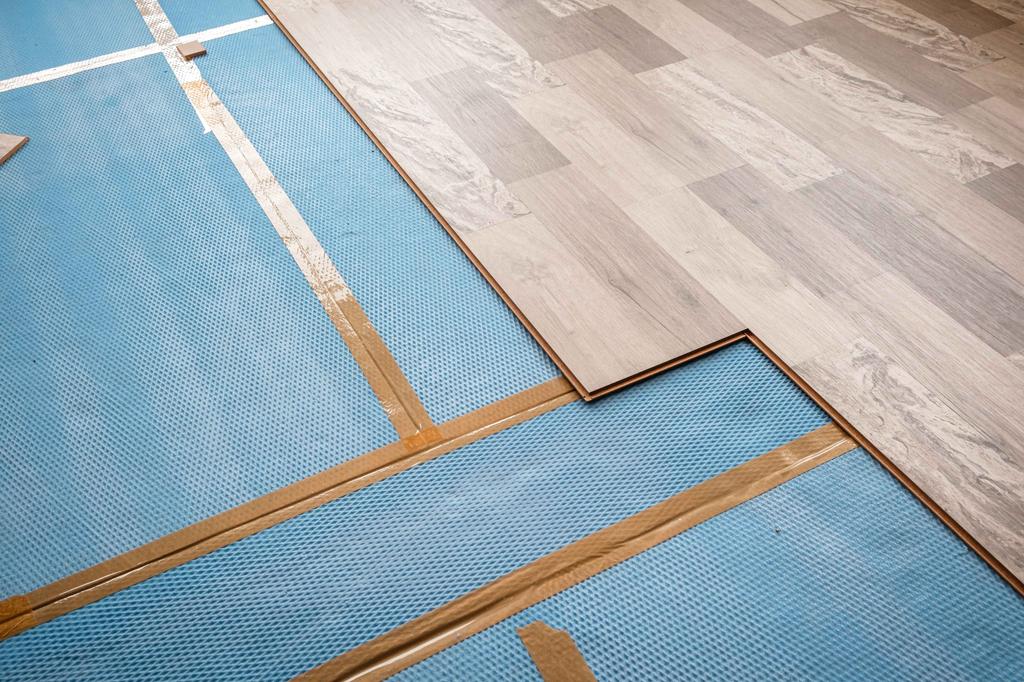
How to Fix Squeaky Floors: Easy DIY Solutions That Actually Work

Landscaping Gravel Types: Pros and Cons

How to Clean Hardwood Floors: Simple Steps for Long-Lasting Shine
Updates & tips
How Small Home Décor Decisions Influence Daily Comfort
When people think about improving their homes, the first ideas that often come to mind are large renovations, new furniture, or major design overhauls. While those changes can certainly have an impact, they are rarely what shape how a home feels daily. In reality, comfort is built gradually, through repeated interactions with the space we live in. The way a home supports everyday routines matters far more than dramatic visual transformations. Daily comfort is closely tied to how smoothly a space functions during ordinary moments. Walking through a room, sitting down after a long day, or preparing meals all rely on details that often go unnoticed. In many homes, comfort is shaped less by major upgrades and more by small everyday details that quietly influence how spaces feel and function throughout the day. These elements rarely stand out on their own, but together they create an environment that feels intuitive and easy to live in. Lighting is one of the clearest examples. Soft, well-placed lighting can make a space feel calm and welcoming, while harsh or poorly positioned light can cause strain and discomfort. A lamp near a reading chair or warm lighting in frequently used areas supports both relaxation and focus. These are not dramatic design choices, yet they affect how people experience their homes every evening. Textiles also play a significant role in daily comfort. Rugs help soften foot traffic and reduce noise. Curtains regulate natural light and add a sense of privacy. Cushions and throws make seating more inviting and adaptable to different needs throughout the day. These items are often chosen for their appearance, but their real value lies in how they improve everyday interactions within the space. Storage solutions are another overlooked factor. Homes that feel cluttered often create subtle stress, even if the design itself is attractive. Simple storage elements, such as baskets, shelves, or organizers, help maintain order without constant effort. When everyday items have a designated place, routines become smoother and spaces feel calmer as a result. Comfort is also influenced by how easily a space adapts to changing needs. A dining area that transitions into a workspace, or a living room that accommodates both social gatherings and quiet evenings, benefits from flexible design choices. Furniture that is easy to move, surfaces that serve multiple purposes, and accessories that can be adjusted seasonally all contribute to a more functional living environment. Another important factor is sensory balance. Homes that feel comfortable often achieve a harmony between visual simplicity, tactile comfort, and sound. Soft materials absorb noise, reducing echoes and creating a more peaceful atmosphere. Natural textures can make a space feel warmer and less rigid. These elements are rarely noticed consciously, yet they strongly affect how a home feels over time. What makes these choices especially valuable is that they are accessible. Improving daily comfort does not require a large budget or professional design expertise. Instead, it involves paying attention to how spaces are actually used. Observing where people sit, walk, or pause during the day can reveal small opportunities for improvement. A chair placed near natural light, a surface cleared for daily essentials, or a soft mat added in a frequently used area can all make a meaningful difference. Over time, these adjustments accumulate. A home that supports daily routines begins to feel intuitive rather than demanding. Tasks require less effort, transitions between activities become smoother, and the space feels more responsive to the people living in it. This sense of ease is often what people describe when they say a home feels comfortable, even if they cannot pinpoint exactly why. Ultimately, daily comfort is not created through one major decision, but through a series of thoughtful, practical choices. By focusing on how a space functions in real life, homeowners can create environments that support both physical comfort and mental well-being. The most successful homes are not necessarily the most impressive at first glance, but the ones that quietly make everyday life easier and more enjoyable.
25 Years Without a Single Deathless Day
November 7, 2000. That was the last day nobody died on a Texas road. Every single day since — through holidays, hurricanes, pandemics, and Super Bowl Sundays — at least one person has been killed in a traffic crash somewhere in the state. The streak recently passed its 25th year, and in that span, more than 91,000 people have died on Texas roadways. That's roughly the population of a mid-sized Texas city — Allen, or Round Rock, or League City — erased entirely. It is the kind of statistic that should stop you cold. And yet, for most Texans, the streak is background noise. Something that belongs to somebody else's commute, somebody else's family, somebody else's stretch of highway. Until, suddenly, it doesn't. The Numbers Behind the Streak Texas averages about 10 to 11 traffic deaths per day. In 2024, the state recorded approximately 4,150 fatalities — a slight improvement from the 4,291 deaths logged in 2023, but still a staggering toll. That works out to one person killed roughly every two hours and seven minutes, around the clock, all year long. There were zero deathless days in 2024. Again. The state came agonizingly close to breaking the streak in January 2024, when one single day saw only one fatality — a driver who ran a stop sign. One death. Not zero. The streak held. Meanwhile, Texans drove more miles than ever. Vehicle miles traveled in 2024 reached 307.5 billion, a 2 percent increase over the previous year. More miles, more exposure, more chances for something to go wrong. Why Texas? Texas leads the nation in traffic fatalities in raw numbers, and it's not particularly close. The reasons are structural, geographic, and behavioral — and they compound in ways that make the streak devastatingly durable. The state is enormous, and driving is unavoidable. Texas has more than 79,000 miles of highways and roadways. Major cities are separated by hundreds of miles of open highway, and public transit infrastructure outside of a handful of urban cores is virtually nonexistent. More than 75 percent of Texas commuters drive alone. In a state where you can drive eight hours and never cross a border, vehicle dependency isn't a lifestyle choice — it's a structural reality. Speed limits are the highest in the country. Parts of State Highway 130 allow speeds of 85 mph. Many rural interstates are posted at 75 or 80. Higher speeds mean shorter reaction times and more violent collisions. In 2024, nearly 1,500 people died in speed-related crashes, and roughly 5,900 more were seriously injured. Rural roads are disproportionately deadly. More than half of all Texas traffic fatalities in 2024 — 2,080 deaths — occurred on rural roads, despite those roads carrying a fraction of the state's total traffic. Single-vehicle, run-off-the-road crashes alone killed 1,353 people, nearly a third of the state's total. Rural roads tend to be narrow, unlit, and far from emergency services. A crash that might be survivable on a well-lit urban highway with a trauma center 10 minutes away becomes fatal on a two-lane road 45 minutes from the nearest hospital. Impaired and distracted driving persist at epidemic levels. Alcohol-impaired crashes killed 1,053 people in 2024, accounting for more than one in four traffic deaths. The deadliest window was between 2 and 3 a.m., with Sundays logging the highest number of DUI-related incidents. Distracted driving, meanwhile, contributed to 380 fatalities and more than 91,000 total crashes. And those are just the cases where distraction was identified as a factor — the actual number is almost certainly higher. The truck traffic is relentless. Texas is the nation's busiest freight corridor. Thousands of 18-wheelers travel I-10, I-20, I-35, and I-45 every day, hauling goods between the Mexican border and distribution points across the country. Crashes involving commercial vehicles tend to be more severe due to the sheer mass differential between a loaded semi and a passenger car. The Human Math Statistics flatten tragedy. So consider the human math behind the streak. Ninety-one thousand deaths over 25 years means roughly 3,640 funerals a year. Ten a day. That's 10 families per day learning that someone they love isn't coming home. Ten sets of phone calls nobody wants to make. Ten empty chairs at dinner tables, 10 cars that will never pull back into the driveway. In 2024 alone, approximately 252,000 people were injured in traffic crashes across Texas. Of those, more than 18,000 sustained serious injuries — the kind that mean months of rehabilitation, permanent disability, or a life fundamentally reorganized around a single moment of impact. And behind each injury and fatality is a cascade of consequences that statistics can't capture: the financial devastation of medical bills and lost income, the psychological toll on survivors and witnesses, the children who grow up without a parent, the marriages that buckle under the weight of a catastrophic injury. "Every one of these cases represents a family whose life has been permanently altered by someone else's negligence," says Benson Varghese, managing partner of Varghese Summersett in Fort Worth. "The numbers are so large that people become desensitized to them. But when you sit across the table from a mother who lost her son to a distracted driver on I-35, that number is one — and it's the only number that matters." What's Being Done Texas isn't ignoring the problem. TxDOT's #EndTheStreakTX campaign, launched years ago, continues to push awareness through billboards, social media, and public service announcements. The agency has committed $17 billion in safety improvements over its 10-year plan and set an official goal of reaching zero fatalities on Texas roads by 2050, with an interim target of cutting deaths in half by 2035. Engineering improvements are underway across the state. In Fort Worth, TxDOT has deployed camera systems on major roadways to identify pedestrians approaching dangerous crossings and alert law enforcement before they step into traffic. The technology has been credited with reducing pedestrian crashes since its installation. Rumble strips, widened shoulders, reinforced medians, and upgraded intersection designs are being rolled out on high-risk corridors. But engineering alone can't end the streak. The overwhelming majority of fatal crashes are caused by human behavior — speeding, impairment, distraction, failure to wear a seat belt. TxDOT's own data confirms it: the top contributing factors in Texas traffic fatalities are all decisions made by drivers. That's both the bad news and the good news. The bad news is that no amount of road design can fully protect against a driver who's texting at 80 mph or weaving across lanes at 2 a.m. with a blood alcohol level twice the legal limit. The good news is that because most crashes are caused by preventable choices, the streak is theoretically breakable — if enough drivers make better ones on the same day. What Drivers Can Do The steps are not complicated. They are, in fact, almost insultingly simple given the scale of the problem. But simplicity and obviousness haven't translated into compliance, which is why the streak persists. Wear your seat belt. In 2024, a significant share of fatalities involved unbelted occupants. Among motorcyclists killed, 37 percent were not wearing helmets. A seat belt won't prevent a crash, but it dramatically improves your odds of surviving one. Put your phone away. Not in your lap. Not on the seat beside you. Away. At highway speeds, five seconds of looking at a screen means you've traveled blind for the length of a football field. No text, no notification, no navigation adjustment is worth that gamble. Slow down. Posted speed limits are maximums, not targets — and they assume dry pavement, clear visibility, and light traffic. When conditions deteriorate, the safe speed drops well below what the sign says. Don't drive impaired. This includes alcohol, drugs, and exhaustion. Drowsy driving impairs reaction time and judgment in ways that closely mirror intoxication. If you're too tired to drive safely, pull over. Drive defensively. Assume other drivers will make mistakes, because statistically, they will. Maintain following distance. Check mirrors. Anticipate lane changes and intersection conflicts. Defensive driving isn't paranoia — it's pattern recognition applied to a high-risk environment. Breaking the Streak There's something almost mythic about the streak at this point — a quarter century of unbroken daily death, stretching across five presidential administrations, two economic crises, and a global pandemic that emptied highways for weeks and still couldn't produce a single deathless day. During the early months of COVID-19, Texas traffic volumes dropped by nearly 44 percent in some areas. People still died. But the streak isn't inevitable. In January 2024, Texas came within a single fatality of ending it. That means the infrastructure, the enforcement, and the driver behavior nearly aligned — just once, just for one day — to produce the outcome that 25 years of campaigns and billions in spending have been chasing. The question isn't whether it's possible. It's whether enough Texans will care enough, on the same day, to make it happen. Ninety-one thousand people suggest they should.
Corrugated Boxes and Wooden Pallets
Why Corrugated Boxes and Wooden Pallets Still Anchor Industrial Packaging Systems Despite rapid advances in automation, materials science, and logistics technology, the foundation of industrial packaging has remained remarkably consistent. Corrugated boxes and wooden pallets continue to support the vast majority of manufactured goods moving through supply chains today. Their longevity is not accidental. When paired with the expertise of a capable industrial packaging supplier, these materials offer a balance of strength, adaptability, cost control, and sustainability that few alternatives can match. Understanding how these components function together is essential for manufacturers seeking to reduce damage, improve efficiency, and maintain predictable operations. The Industrial Packaging Supplier as a Systems Partner An industrial packaging supplier plays a critical role in helping organizations move beyond ad hoc packaging decisions. Rather than supplying boxes and pallets in isolation, experienced suppliers evaluate how packaging performs across production, warehousing, and transportation environments. This systems-level view allows packaging to support operational objectives such as throughput, safety, and scalability. A knowledgeable industrial packaging supplier considers factors such as stacking height, load weight, handling frequency, and transit conditions before recommending solutions. Manufacturers that leverage this expertise often see fewer packaging-related failures and more consistent performance across facilities. Corrugated Boxes: More Than a Shipping Container Corrugated boxes are frequently underestimated in industrial environments. While they appear simple, their design directly influences load stability, product protection, and space utilization. Industrial corrugated boxes are engineered based on compression strength, flute profile, and wall construction. Boxes that perform well in single-unit shipments may fail quickly when stacked in a warehouse or subjected to vibration during long-haul transport. Right-sizing corrugated boxes is one of the most effective ways to improve performance. Boxes that closely match product dimensions reduce void fill, improve stacking efficiency, and lower freight costs. Working with an industrial packaging supplier helps ensure box specifications align with real-world demands rather than theoretical ratings. Wooden Pallets as Structural Foundations Wooden pallets form the structural base of most industrial loads. Their ability to support weight consistently and interface with material-handling equipment makes them indispensable across manufacturing sectors. Not all wooden pallets perform equally. Load capacity, deck board spacing, stringer configuration, and overall build quality all influence pallet durability. Inconsistent or low-quality pallets can lead to flexing, load shifting, and carton failure. Standardizing wooden pallet specifications across operations improves predictability and reduces handling issues. An experienced industrial packaging supplier can help manufacturers select pallet designs that match product weight, storage conditions, and transportation methods. Designing Boxes and Pallets to Work Together Corrugated boxes and wooden pallets should always be evaluated as a combined system. Box dimensions determine pallet patterns, while pallet size and condition affect how weight is distributed across boxes. When boxes overhang pallets or pallets flex under load, compression forces increase and box failure becomes more likely. Aligning box footprints with pallet dimensions improves stacking stability and reduces damage risk. Industrial packaging suppliers often analyze box-and-pallet combinations to identify improvements that enhance performance without increasing material usage or cost. Impact on Warehouse Operations Packaging design has a direct effect on warehouse efficiency. Corrugated boxes with consistent dimensions simplify palletizing and racking. Wooden pallets built to uniform standards move more smoothly through forklifts, conveyors, and storage systems. Poorly aligned packaging slows operations, increases manual adjustments, and raises the risk of accidents. In contrast, well-designed box and pallet systems support faster throughput and more predictable workflows. Small improvements in packaging consistency often deliver outsized gains in labor efficiency and space utilization. Cost Control Through Packaging Optimization Packaging costs extend far beyond material pricing. Damage-related losses, freight inefficiencies, labor time, and waste all contribute to total cost of ownership. Optimizing corrugated box design can reduce dimensional weight charges and minimize product damage. Selecting durable wooden pallets reduces replacement frequency and lowers long-term handling costs. Industrial packaging suppliers frequently conduct packaging assessments to uncover cost-saving opportunities that do not compromise protection or safety. Damage Prevention and Product Quality Product damage remains one of the most visible indicators of packaging performance. Crushed boxes, collapsed pallets, and shifted loads are often symptoms of mismatched or under-engineered packaging components. Corrugated boxes designed for stacking and compression reduce carton failure. Wooden pallets with adequate strength and consistent construction improve load stability during transit. When packaging systems are designed intentionally, damage prevention becomes proactive rather than reactive. Safety and Ergonomic Considerations Packaging choices influence workplace safety as much as they affect product protection. Unstable pallets and collapsing boxes increase the risk of injuries during handling. Consistent pallet construction reduces tipping hazards during forklift operation. Corrugated boxes with sufficient compression strength support safer stacking in warehouses and staging areas. Designing packaging systems with safety in mind protects workers and supports compliance with occupational safety standards. Sustainability and Responsible Packaging Sustainability is an increasingly important factor in industrial packaging decisions. Corrugated boxes offer strong environmental advantages due to their recyclability and renewable material base. Wooden pallets also support sustainability goals when reused, repaired, or refurbished. Durable pallet programs reduce waste and lower the environmental impact associated with single-use packaging. Industrial packaging suppliers that prioritize durability and reuse help manufacturers align sustainability objectives with operational efficiency. The Value of Packaging Expertise Industrial packaging challenges vary widely by industry, product type, and distribution channel. Solutions that work in one environment may fail in another. Packaging professionals bring experience across applications, helping manufacturers select the right combination of corrugated boxes and wooden pallets. Testing, analysis, and performance monitoring help validate designs before full-scale implementation. This expertise reduces trial-and-error costs and improves consistency across shipments. Building Long-Term Packaging Relationships Many manufacturers are moving away from transactional purchasing and toward long-term partnerships with a trusted industrial packaging supplier. Working with a single supplier for corrugated boxes and wooden pallets simplifies procurement and improves coordination. Suppliers such as OEM Materials are often chosen by organizations seeking comprehensive packaging support rather than individual components. These partnerships allow packaging solutions to evolve alongside production volumes and distribution needs. Packaging Systems as a Competitive Advantage Industrial packaging is no longer just about containment. When designed as a system, it improves efficiency, reduces cost, and supports reliable delivery. Corrugated boxes and wooden pallets remain foundational elements of this system. Supported by an experienced industrial packaging supplier, they become tools for operational control rather than sources of risk.