Prefer to talk to a pro?
Call today, and let us connect you with the perfect merchant!
Call today, and let us connect you with the perfect merchant!
About Sloansville, NY
Sloansville is a town located in Schoharie County, New York and is part of the Albany metro area. When in the area, be sure to visit the Caverns Creek Grist Mill Museum and the Old Stone Fort Museum, located within 10 miles of Sloansville. Another attraction in the area is the Howe Caverns. Two historic sites within 20 miles of Sloansville include the Johnson Hall State Historic Site and the Schoharie Crossing State Historic Site. Outdoor lovers will enjoy spending some time in the parks of the area. Some nice ones to visit include Max V. Shaul State Park and Thompson’s Lake State Park. The Max V. Shaul State Park is located in the Schoharie Valley and offers camping, trails, fishing, and picnic sites. Some colleges located within 20 miles of Sloansville are Fulton-Montgomery Community College, Schenectady County Community College, and SUNY Cobleskill. Local businesses in the area include Dairy Carnival Restaurant and Hilltop Tavern.
Best Businesses in Sloansville, NY



Prefer to talk to a pro?
Call today, and let us connect you with the perfect merchant!
Call today, and let us connect you with the perfect merchant!
Related articles
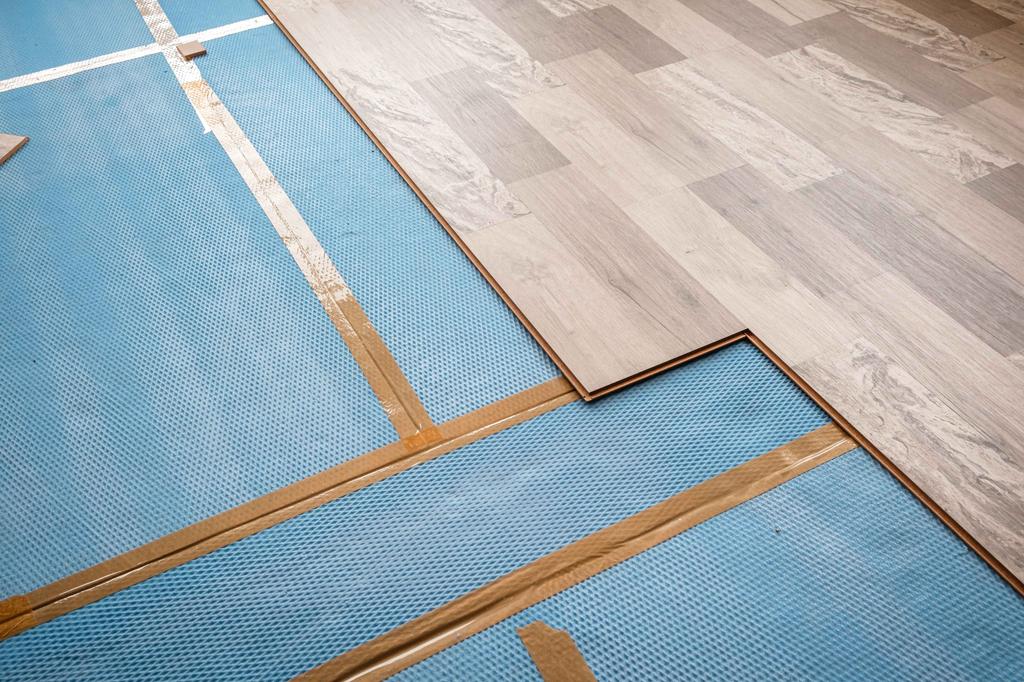
How to Fix Squeaky Floors: Easy DIY Solutions That Actually Work

Landscaping Gravel Types: Pros and Cons

How to Clean Hardwood Floors: Simple Steps for Long-Lasting Shine
Updates & tips
web design basics guide
just so easy these days. With lightning-fast internet speed and sophisticated browsers, designers hardly have to deal with any of the restrictions that shaped the early days of the web. A website is, more than ever, a designer’s canvas.” This may be true enough from the perspective of someone already comfortable with the basics, but if phrases like “CSS responsive grid system” and “Google Web Fonts” are alien to you, then jumping into the supposedly “oh-so-easy” world of web design may still seem a daunting proposition.know more aboutwebsite design columbia sc. In recognition of this, we put together a truly basic set of web design basics with the beginner in mind. Of course, it’s never a bad idea to review the fundamentals, even if you consider yourself a wiz. 1. Grid systems _ Manuscript via Graphics.com; New York Times grid overlay via Design O’ Blog Since the invention of the codex in the 1st century, the grid has determined how we read. Thousands of variations, involving different arrangements of rows and columns, have emerged over time. Think of the way text and images are arranged in books, newspapers and magazines. These are the systems that were more or less directly carried over onto the web, and they work. Word to the wise: many a designer has attempted to avoid the grid in the name of “creativity”; many such websites go unread. In a world where people are as, if not more likely to browse the web on phones and tablets than on traditional computers, the issue of “responsive design”—designs that translate to smaller screen sizes in a smooth and intentional manner—is also paramount. responsive-ready grid system Profound Grid is an example of a compatible, responsive-ready grid system To make our lives easier, a huge number of pre-fabricated grid systems have emerged which are responsive, compatible with major coding languages, and generally free to download. Some popular ones are 960.gs, Simple Grid and Golden Grid System, but the list of good options is truly enormous, with some being more complex than others. Here’s a good article from WebDesignerDepot to get you started. Of course, if you’re feeling adventurous or feel your project demands a truly unique solution, then by all means, create your own. 2. Visual hierarchy _ The Build conference website puts hierarchy principles to use We recently wrote a full article on this subject, so we’ll be brief here. Basically, it’s a known fact that in most cultures, people read left-to-right and top-down. However, it is also a known fact that, within these parameters, reading behavior follows a much more complex set of rules. This is especially true on the internet where people actually “scan” pages much more than they “read” them. Good web pages are built in response to these measured reading patterns by placing important elements, like the logo, call to action or a key image, along the axes that the reader is expected to scan. These conventionally take either an “F” or a “Z” shape. F-pattern demonstration F-pattern demonstration via Nielsen Norman Group Beyond that, visual hierarchy is about signaling to readers what should be read first and what should be read next. After page placement, this may involve strategies like font size, spacing, direction and typeface pairing, as well as the use of color highlights. 3. Web-safe fonts _ Open Sans Open Sans is a nice web font from Google Web Fonts In 2014, the term “web-safe fonts” already feels like something of an anachronism. Back in the early days of the internet, browsers supported a very limited number of fonts—typically just ones that were already installed in users’ word processing software—and if you deviated from these, some visitors would just wind up seeing random symbols. Today, it is still true that certain fonts are supported by most browsers while others fonts are not, but the number of web-safe options has exploded thanks to the adoption of what is known as @font-face embedding in most modern browsers. Indeed, many designers complain of having too much to choose from. Fee-based font services include Typekit, WebINK and Fontspring. You can find nice free fonts, too, if you do a little searching through free services like Google Web Fonts. Here is a recent roundup of nice free web fonts by CreativeBloq. Google Web Fonts Arvo is another nice font from Google Web Fonts Now that you know where to look, there are just a few general rules to keep in mind: Serif fonts are for headlines In web design, serif fonts are always reserved for headlines, because at smaller sizes they become hard to read. Body text should generally be sans-serif. Keep fonts minimal To reduce clutter, keep the number of different fonts on a website to a minimum. Two or three at the most. Check out our recent article on smart font pairing for more information. Don’t take up too much space Remember that some font files can be pretty enormous, and this could potentially slow the load time of a website. 4. Images and colors Hype! Hype! is bold, yet monochrome The principles of image and color placement are not especially unique to web design, so we won’t go into too much depth here. The main maxim to keep is: don’t overdo it. For colors: Keep your color palette minimal Like fonts, just stick to 2 or 3. They should of course echo the host’s branding, while serving to highlight important areas, as noted in the “visual hierarchy” section. Consider color blindness One other consideration worth keeping in the back of your mind is the fact that something like 5% of the (male) population is colorblind, so watch out with your color pairings. We wrote a more in-depth article on the subject here. Square web design Square’s photo helps you understand the product For images: Keep movement minimal Avoid images that move. Resist the urge for flash. Even .gifs are highly questionable, unless executed with the utmost skill. In general, studies show that viewers much prefer websites that keep still. Choose images thoughtfully Don’t use images simply as a way to fill space; visitors will pick up on this immediately and may lose interest in your page. Instead, only use images which communicate useful information—illustrating accompanying text or explaining something about a product being described. This article on Designinstruct covers this issue more in-depth. Always abide by all stock image licensing restrictions Be aware of the licensing restrictions associated with your images. Most images are copyrighted, meaning that you or your client will have to pay to use them, according to your needs. You can familiarize yourself with this subject using past articles we have written. Keep file sizes small Make sure your image sizes are as low as possible (web resolution is 72 ppi). Images often account for 60% or more of a web page’s size/loading time.
Sustainability in the Workplace
As people around the globe mark World Environment Day today, we’ve been giving a lot of thought to the principles of Reduce, Reuse and Recycle, not in terms of waste but how to create a sustainable workplace. More-Leadership training in Dubai. The term sustainable employability is used to describe an initiative that combines elements also known as engagement, career development, talent management, wellness and career transition. The goal is to ensure that employees are not only healthy, engaged and productive, but also prepared to adjust to future disruptions that may require them to take on entirely new roles within the company, or perhaps leave to find a new job. To better understand sustainable employability as a growing trend, and to gauge its ROI, LHH conducted research in 2016, a study of 9 Dutch customers, companies of various sizes and industries, all with a global profile and together, represented a base of more than 12,000 employees. The study showed that while all companies employed some elements of sustainable employability, only two scored highly in multiple elements of a holistic program. Not surprisingly, those two companies also demonstrated greatest overall profitability and market growth among the organizations studied. The results are not surprising. Advocates of the elements of sustainable employability – engagement, career development and wellness, have for many years been connecting these to greater operational performance and bottom line results. The companies that are deeply committed to sustainable employability are demonstrating clearly that in isolation, engagement, career development and wellness are not as effective as they are in a combined, focused program to make employees happier, healthier and better prepared for future career disruptions. The study also highlighted tools an organisation was using to create conversations with employees about re-orienting their career. A company focus on the topics mentioned below enable companies to consider what sustainable employment means for them. • Interactive programs for groups to consider questions such as “What did you want to be when you were a kid, and what did you want to do when you were grown up?” Encouraging the questions ‘Do I want to do the same job in five or 10 years?’ ‘Is my job even going to be here in five or 10 years?” • Discussions to help employees focus on areas where they can improve, and motivate them to pursue career goals they may have abandoned long ago. • Training with managers on how to engage their employees in conversations about sustainable employability. Encouraging managers to think about incorporating sustainable employability in their day-to-day interactions. Empowering managers and the employees. This positive impact on corporate sustainability on attracting and retaining talent was demonstrated in HBR research where it revealed that Corporate sustainability offered to employees gives them a sense of purpose, makes them feel like valued stakeholders and increases engagement. The results show Employee loyalty was 38% better in companies with solid sustainability strategies and programs in place, compared to companies with poor sustainability performance. LHH Gulf works with companies of all sizes delivering bespoke programs that aim to equip, support and strengthen business leveraging their talent, their biggest asset.
WHY IT IS WISE TO VISIT THE EYE DOCTOR
Eye care is one of the most important and yet overlooked check-ups that the general public need to do. Whether it is due to general avoidance of medical conditions or the cost of an eye test in Dubai, Just because a person doesn’t have a visible and noticeable problem with their sight does not mean that they may not have problems with their eyes or eye sight. Prevention is better than cure, this is why it is wise to visit the eye doctor once a while before any problems may develop.read more aboutDental clinic in Dubai. Eye exams can be taken at clinics, hospitals or even at optical centres. The doctors who conduct eye exams are known as Opticians, Optometrists or Ophthalmologists depending on their specialization. There are several tests that can be conducted to test your sight and your eyes themselves and these are part of what determine the costs of an eye test in Dubai. A comprehensive eye exam includes but isn’t restricted to, the following: A review of your personal and family medical history Using an eye chart to test your near and far sight This also is an evaluation of the existence of nearsightedness or farsightedness Eye pressure tests to detect glaucoma Eye coordination exercises to test how well both your eyes work together. Be sure to confirm with your doctor on which of these tests and any other you need because they affect the total cost of an eye test in Dubai. Other aspects such as whether or not you have insurance coverage and where you go to get checked at also affect the cost of an eye exam in Dubai. Always answer any questions asked by the doctor honestly to prevent the chance of a misdiagnosis. Eye exams are generally cheaper and less intensive if conducted by an optician at an optical store however, be wary of cheap eye exams from clinics as they may have hidden costs for any extra services or tests you may want to have. Tests conducted by ophthalmologists are more expensive given the fact that they are highly trained and specialized in the field of the eyes and sight. Also note that cost of an eye test in Dubai for contact lenses is more than an average eye exam. It’s also a good idea to get a referral someone you trust. If you want to know the cost of an eye test in Dubai and are looking to get an eye exam, why not come by GMCClinics. With its top of the line facilities, highly trained and experienced doctors and staff and with competitive rates and the trust and reputation of years of good service, they are a great choice for your next eye exam.