Prefer to talk to a pro?
Call today, and let us connect you with the perfect merchant!
Call today, and let us connect you with the perfect merchant!
About Bedford, PA
The borough of Bedford, named after a local fort which was named after the Duke of Bedford, is located in Bedford County, Pennsylvania. Major attractions include Fort Bedford Museum, Old Bedford Village and the Espy House, a National Historic Landmark. Each year, the Bedford County Fair (July) and the Fall Foliage Festival (Oct) are held here. Two of the best places to visit when you are in Bedford are nearby Shawnee State Park and Blue Knob State Park.
Bedford County, PA Fort Bedford Museume Old Bedford Village Espy House Shawnee State Park Blue Knob State Park
Best Businesses in Bedford, PA








Prefer to talk to a pro?
Call today, and let us connect you with the perfect merchant!
Call today, and let us connect you with the perfect merchant!
Related articles
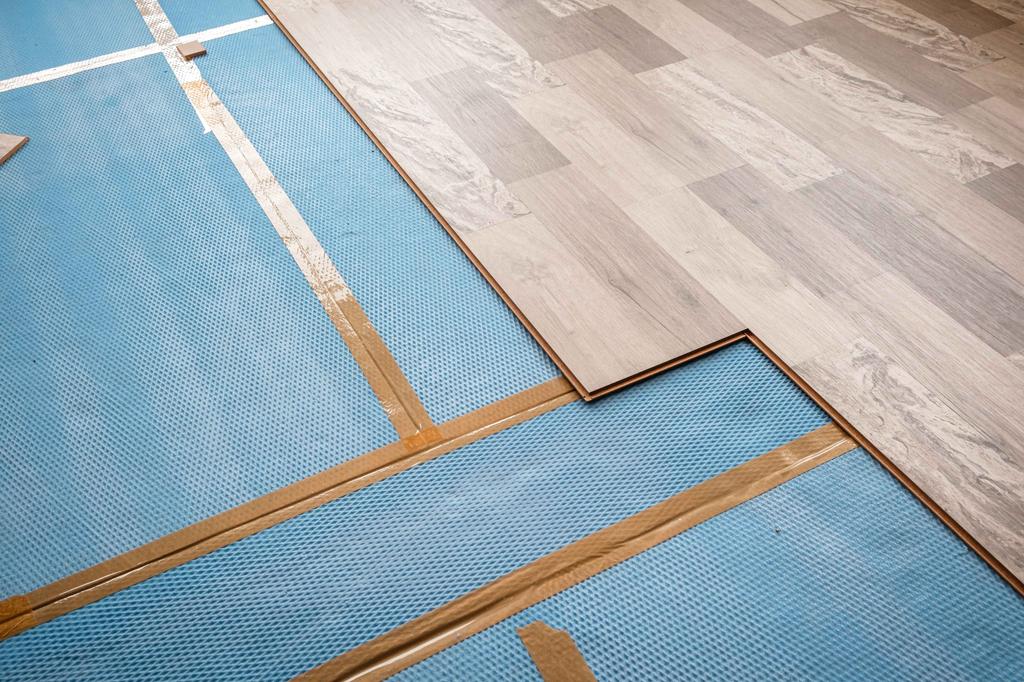
How to Fix Squeaky Floors: Easy DIY Solutions That Actually Work

Landscaping Gravel Types: Pros and Cons

How to Clean Hardwood Floors: Simple Steps for Long-Lasting Shine
Updates & tips
J. Carroll Tobias (American 1899 - 1996)
Muted Landscape Oil on board, 15.5 x 19.25/Signed lower left Painter Bio:J. Carroll Tobias (American 1899 - 1996) J. Carroll Tobias was born in Hamburg, PA, but moved to Bethlehem, PA in 1915. Tobias was an accomplished calligrapher, illustrator, industrial photographer, silversmith, goldsmith, painter, and jeweler. Circa 1928, after his marriage to Agnes Serfass, Tobias began working as a freelance commercial artist. Among Tobias’s other interests appears to be photographs and adding color to them, as he published in 1934, “The Art of Coloring Photographic Prints: A manual of Airbrush Techniques.” That he understood the importance of color is expressed by a statement he made in this book: Color has the power to cheer, to stimulate, to animate. It can soothe and rest us, or it can induce an emotion of depression and melancholy. When painting a picture, the mood of the artist is reflected in his work and can create a similar mood in the mind of the observer whose sensibilities are subject to suggestion. Tobias had other interests, as another book he wrote, “Students Manual of Microscopic Technique” (1936), explores the wonders that can be discovered living in the waters of ponds and streams with the aid of a microscope. He describes how to collect and preserve specimens, as well as, the proper care of a microscope. In 1944, he opened a shop in the basement of the historic Goundie House in Bethlehem which he maintained for over 40 years. He sold paintings, jewelry and other goods, and probably slides and microscopes, as well. Tobias also exhibited and sold his paintings through the A. B. Wyckoff Department Store in Stroudsburg, PA during the middle part of the 20th century. This 1956 painting, “Muted Landscape” shows Tobais’s emotive skill with color. To purchase thisJ. Carroll Tobias painting, call: 724–459–0612. Jerry Hawk, Bedford Fine Art Gallery www.bedfordfineartgallery.com
Henry Pruett Share (American 1853 - 1905)
Sire and Son Oil on Canvas, 13.5 x 16.5 inches/Signed lower left Painter Bio:Henry Pruett Share (American 1853 - 1905) 19th century artist Henry Pruett Sharewas born in Santa Cruz, California in 1853, three years after it was admitted as the 31st state. Young Share displayed artistic talent, described in his 1906 biography in The Memorial Cyclopedia of the Twentieth Century, comprising memoirs of men and women who have been instrumental in the progress of the industries, professions, arts, literature, legislation, society and charities of the United States: “even as a boy, he exhibited that artistic genius which was afterward, in its developed form, to give him enviable prominence in the art circles of this country.” However, the new state had yet to develop a serious cultural and social interest in the arts. Share took advantage of what opportunities he could find in pursuit of his eventual career as an artist. He was apprenticed to engraver Theo. Butler and worked with other San Francisco engravers before leaving for New York City in the late 1870s. There, he took study at the Art Students’ League and then pursued a career as a pen and ink artist; however, he later turned to etching, quickly becoming a leader in this field. Share opened his own plate printing company because he could not find printer that he felt did justice to his etchings. He left the printing business after cheaper processes became available, and focused on black and white drawings for magazines and books. The 1906 biography also states that “he was not long in gaining recognition and standing as an illustrator delineator, also etcher of marked talent and unusual originality and merit. His work as an illustrator became known all over the country.” He was sought after for his illustrations by major magazines, such as Harper’s, Century, among others, and for book illustrations. He was also the art editor for New York Herald, New York World and the New York Journal. Share’s mastery of draftsmanship can be seen in this oil painting titled “Mother and Foal” – as a realistic and detailed drawing is the foundation of a masterpiece. Share was a member of the Salmagundi Club, New York Press Club, the Knickerbocker Field Club, of New York, the Union League, and the Royal Arcanum. He exhibited at the National Academy of Design (1878-85) and the Pennsylvania Academy of the Fine Arts (Philadelphia, 1880-81). To purchase thisHenry Pruett Share painting, call: 724–459–0612. Jerry Hawk, Bedford Fine Art Gallery www.bedfordfineartgallery.com
Horace Wolcott Robbins (Jr. American 1842–1904)
River Scene with Men in a Canoe Oil on canvas, 9.5 x 7.5 inches/Signed lower left Painter Bio:Horace Wolcott Robbins 19th century artist Horace Wolcott Robbins, whose parents both were from noted Connecticut families, was born in Mobile, Alabama in 1842. The family moved to Baltimore, Maryland in 1948 and Robbins was to later attend Newton University in that city (closed in 1859). This was followed by drawing lessons with the German landscape painter Augustus Weidenbach, who was then a resident of Baltimore. Circa 1861, young Robbins left for New York City and took study with James M. Hart for six months before opening his own studio. Circa 1862, he moved to the Tenth street building, a center for New York City’s artists at that time. During the Civil War Robbins served for three months at Harper’s Ferry as a member of New York’s Twenty-second Regiment. After his service, he was on a trajectory to an art career; in 1863 Robbins was elected a member of the Century Club, and in 1864 he was selected an Associate of the National Academy of Design. He was a friend of Frederic Church and traveled to the island of Jamaica with him in 1865 to sketch West Indian scenery for a few months, followed by a trip to Europe, that same year, first to England, then on to Paris. In Paris, he studied with Theodore Rousseau and opened a studio, where he remained until 1867, sketching in Switzerland in 1866, returning to Paris for the Exhibition of 1867. He returned to New York City in the fall of 1867. Robbins would spend his summers in the Farmington valley of Connecticut, notably at Simsbury, of which his wife was a native. Robbins was a member of the National Academy of Design (Associate 1864, Academician 1878; American Water Color Society; Artists Fund Society; NY School of Applied Design for Women (trustee); and MMA (fellow). He exhibited at the National Academy of Design (1863–94); Pennsylvania Academy of the Fine Arts (1862–64); Boston Art Association; Brooklyn Art Association (186–83); Art Institute of Chicago. To purchase thisHorace Wolcott Robbins painting, call: 724–459–0612. Jerry Hawk, Bedford Fine Art Gallery www.bedfordfineartgallery.com