Prefer to talk to a pro?
Call today, and let us connect you with the perfect merchant!
Call today, and let us connect you with the perfect merchant!
About New Freedom, PA
New Freedom is a part of the York County area of Pennsylvania known for its rich, fertile soil which provides comfortable living for farming and agricultural opportunities. Major attractions include Bon-Air Country Club and Seitzland Rifle Club.Each year in the summer season the New Freedom Lions Club Carnival attracts many people here. Among the biggest companies in New Freedom are Crescent Industries Inc and York Bank and Trust Company .The biggest schools here are Susquehannock High School and York Catholic High School.One of the best places to visit when you are in New Freedom is New Freedom Railroad Cafe.Famous persons from New Freedom include soccer player, Nicole Barnhart.
Best Businesses in New Freedom, PA

Prefer to talk to a pro?
Call today, and let us connect you with the perfect merchant!
Call today, and let us connect you with the perfect merchant!
Related articles
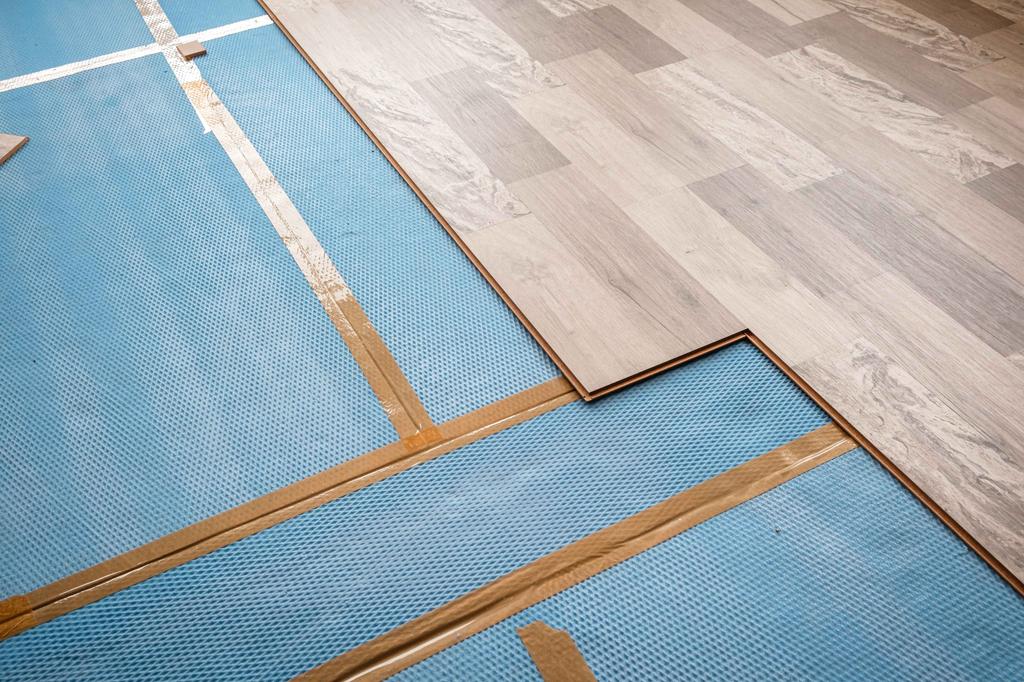
How to Fix Squeaky Floors: Easy DIY Solutions That Actually Work

Landscaping Gravel Types: Pros and Cons
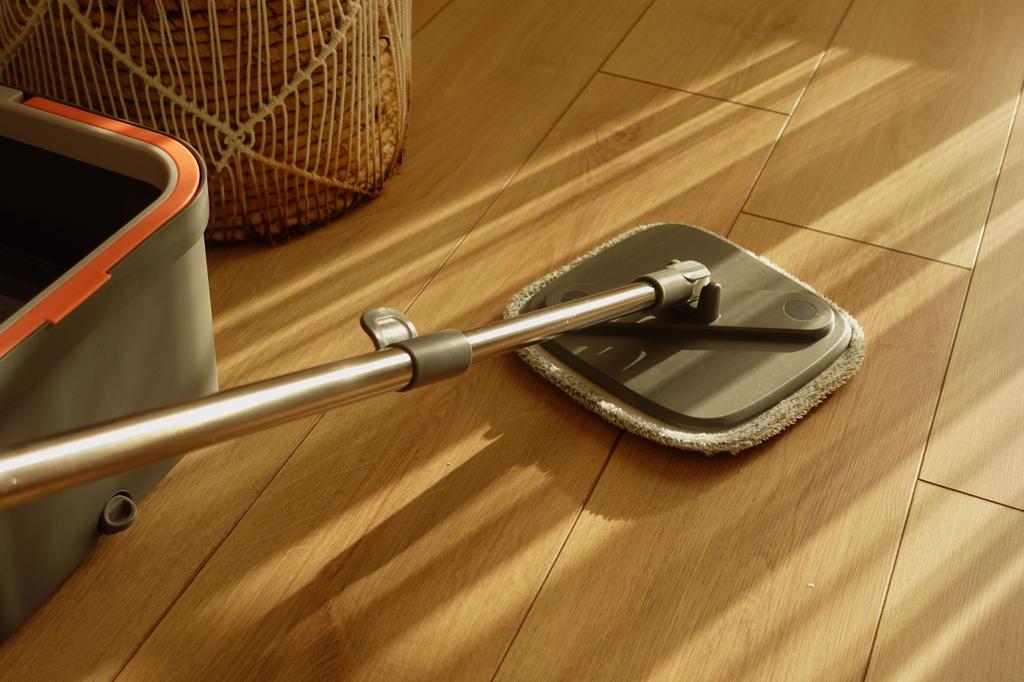
How to Clean Hardwood Floors: Simple Steps for Long-Lasting Shine
Updates & tips
WHAT IS A CENTRAL HEATING RADIATOR
Central heating is made up of several elements. Concretely it has a heat generator , which can be a boiler for example, heating a coolant whose purpose is to convey the heat to radiatorsرادیاتور شوفاژwhich will take care of distributing it in the various rooms of the house. . The radiators only use the water heated by the boiler (40 to 70 ° C) which circulates through pipes in a closed circuit . Hot water in contact with the emitters creates heat exchange and heats the ambient air by convection and radiation. Central heating radiators can be made of aluminum, cast iron, steel, vertical or horizontal and are classified in the category of inertial heaters and more precisely in the niche of soft heat heaters . Central heating radiators have the same type of operation as the towel radiators that are increasingly found in bathrooms in French homes and elsewhere. During your installation, it will therefore be necessary to have several radiators arranged throughout the home and which will guarantee your thermal comfort . WHICH CENTRAL HEATING RADIATOR TO CHOOSE? As we have seen previously there is no such thing as a central heating radiator; indeed you can find several types of materials, power and meaning. Here is a quick point of the advantages and disadvantages of materials: Steel radiators : Generally they are quite designer and rise quickly in temperature which makes them more efficient more quickly. In addition, they are easy to install, fairly light compared to other models and present less risk of leaks . However, once switched off, the temperature drops just as quickly as it rose and it seems that they are less resistant to shocks. Its manufacturing cost is low, so it is very common for sale and distributed in mass. Cast iron radiators : Vintage and rustic in appearance, cast iron radiators are essential in the sector, they constantly restore heat and are recognized for their strength and quality . However, they are often quite expensive and it is better to hire a professional to install them. Aluminum radiators : They are between the two models described above: they are referred to as average inertia , which means that the temperature still remains for a certain time after the heating has been switched off. In addition, aluminum radiators are generally more affordable than cast iron ones. This type of radiators heats up more quickly because they are very good conductors of heat . It is an assembly of several elements so they present more risk of leaks. In addition, they are noted as the least bulky and the most aesthetic . As a general rule, it is not recommended to mix the materials too much, so it should be understood that once your choice has been made it is preferable to put the same radiators in all the rooms of the home . There are also vertical models as well as horizontal models , but in practice this does not change much to the performance of your central heating radiators. This deal is more a matter of design and personal choice, but also of practicality in your home. The power on the other hand must play an important role in the selection of the model which you will have to choose. The power required for your radiators will depend entirely on your home, since it relates to the volume of the rooms and their insulation.. As a general rule, a 3 kW radiator is recommended for a room of 30 m2. Of course this is an average and it is better to go through a professional because each case is specific. HOW TO PROPERLY MAINTAIN YOUR CENTRAL HEATING RADIATOR? It is important to ensure that your radiator is properly maintained, initially to ensure its longevity and its proper functioning, but also to avoid overconsumption of electricity. During this operation you will hear of two terms: sludge removal and purging . It is indeed necessary to ask for explanations on the meaning of these. The sludge removal is a simple technique that eliminates sludge accumulated in your network to prevent water that circulates is corrosive and damages your system. There are certain signs that there is sludge inside your piping system , for example your central heating radiators suddenly make a lot of noise or they are partially cold. It is a sign that something must be done; first, it is advisable to bleed your radiators . And therefore to evacuate the air present in a hot water radiator. If the operation is not conclusive, you will have the choice between two types of sludge removal: Or hydrodynamic sludge removal which consists of injecting high pressure air into the circuits. Or chemical sludge , more common, which consists of introducing a chemical into the piping network. HOW MUCH DOES A CENTRAL HEATING RADIATOR COST? HOW TO SAVE MONEY? It is certain that the complete installation of radiators for central heating comes at a cost. Indeed, you will need a budget within a fairly wide price range , initially determined by the type of product chosen: Although, the budget initially seems important, it should not be forgotten that initially this type of radiator allows in the state to make quite significant savings on your electric bill which makes the investment already worthwhile. But additional means exist to make your installation even more profitable and still save on your bills . Providing yourself with a thermostat, for example, is currently one of the best known tips to reduce the cost of your radiators , you can also think of reducing the temperature. A constant and daily maintenance of all your central heating system will also allow you to achieve significant savings by year end.
CHOOSING A CENTRAL HEATING BOILER
Generally, a central heating boiler is a replacement for a central boiler to simultaneously provide hot tap water and hot water for the heating system in apartments or villas. It can be easily mounted on a wall or placed on the ground, offers higher energy efficiency and less fuel consumption versus a central boiler, eliminates the need for extensive piping in a building, and allows the independent supply of hot tap water and hot water for the heating system in each residential unit. Based on their installation, central heating boilersپکیج دیواریare categorized as wall-mounted and free-standing types. TYPES OF THE CENTRAL HEATING BOILER Based on their fuel, central heating boilers come in four categories: Gas-powered (silent wall-mounted or free-standing) Diesel-powered (free-standing, installed in the mechanical room or a storage room out of a residential unit) Bi-fuel (free-standing, installed in the mechanical room or storage room out of a residential unit) Electrical (silent wall-mounted or free-standing) Diesel-powered and bi-fuel heating boilers are of the free-standing type and mainly used in houses and residences with yards. Central Heating Package BENEFITS OF A GAS-POWERED WALL-MOUNTED HEATING BOILER Silent operation Space conservation Adjustable temperature Independence of residential units Ease of installation, set up, and maintenance Accessibility and adjustability from inside a residence Optimal fuel consumption, high efficiency and heat exchange rate, and reduced fuel costs Excellent safety (featuring sensors for the hot tap water and heating water, as well as a smoke sensor) KEY PARAMETERS FOR SELECTING A GAS-POWERED WALL-MOUNTED HEATING BOILER Amount of hot water demand The surface area of the residential unit Chimney type (vertical up to the rooftop or horizontal) Providing the required oxygen for fuel combustion in the heating unit According to chapter 17 of the 2011 National Building Codes, the minimum surface area permissible for installing a heating boiler in a residential or business unit is 64 square meters; otherwise, an air intake is required for proper combustion. TECHNICAL TIP ON SELECTION AND PURCHASE OF THE CENTRAL HEATING BOILERS The fanned boiler has an aeration fan in the exhaust part. This kind of fan is used when the boiler is installed in open space (for example balcony and patio) or when some part of the chimney path is horizontal (more than 30 cm). Because of this fact, the wall-mounted fanned boiler is usually equipped with a special two-shelled chimney that it´s interval sell´s diameter is 6 cm and the external shell´s diameter is 10 cm. smoke discharges through this pipe. In double heat exchanger boilers, because of the existence of two heat exchangers (one for radiator heating system and one to supply warm water consumed), there is a constant flow of warm water. This provides more warm water and reduces sediments in the convertor. Double heat exchangers boilers are used when the entering water is hard (high mineral content) or the building area is more than 120 m2. To approximately calculate the capacity of the boiler of the required heating boiler, the area of the residential unit is multiplied by 150 (Kcal), and the area of administrative units is multiplied by 100 (Kcal) (because administrative units do no consume a remarkable amount of water). A single heating boiler can be used for two office units with low hot water consumption if the heating capacity of the device fits the area of the places and some technical provisions are taken into consideration. However, in residential units, due to the limited capacity of the units for the provision of hot water and the possibility of simultaneous hot water demand in both residences, a single heating boiler for two residences (even with small areas) is strictly not recommended. Some models of central heating boilers are equipped with an anti-frost system. Three requirements should be met for the operation of this system: the boiler should be plugged in, the least water pressure in the boiler is one atmosphere, and the boiler has gas as fuel. Nowadays, the heating system of many buildings consists of a wall-mounted heating boiler along with a radiator, a wall-mounted heating boiler along with a ducted split, or a well-mounted heating boiler along with a ceiling-mounted fan coil. In such systems in cold seasons, the hot water produced by the heating boiler must reach the fan coil or ducted split. To this end, considering the limited head or pressure of the circulator pump (6 ft), the calculations of pipe diameters and pipework from the heating unit to the fan coil or ducted split must be suited to the pipework tables of closed systems supervised by experts in order to make sure the hot water produced by the heating unit reaches the fan coil or ducted split. THE INSTALLATION LOCATION OF A GAS-POWERED WALL-MOUNTED HEATING BOILER Maintain a minimum distance of 1 meter from the front wall Avoid installing it above a stove or other heat-generating appliances Maintain a minimum distance of 15 cm from the adjacent wall or cabinet Maintain a minimum distance of 120 cm between the floor and the bottom of the heating unit Maintain a minimum vertical distance of 30 cm between the chimney vent and the chimney regulator cap DO NOT attach the draft hood of a wall-mounted heating boiler directly to the chimney vent in the wall, as it must be attached at least 30 cm below the chimney vent. The lower the unit is mounted compared to the chimney vent, the better; as this increased distance between the heating unit and chimney, vent enhances the ventilation power and the exhaust of combustion gases from the unit. If you are going to purchase a vented wall-mounted heating boiler, and also intend to mount it inside a cabinet, make sure the unit receives sufficient oxygen for proper ignition. The bottom of the cabinet must remain open and its door needs to be of the collapsible type to allow sufficient oxygen feed for the unit. PERFORMANCE OF CENTRAL HEATING BOILER IN DIFFERENT SEASONS In cold seasons, the unit has to provide hot water for both the taps and the heating system. In warm seasons, the unit only provides hot tap water. In better words, when hot water is demanded, turning a tap automatically turns the heater on, and conversely, closing the tap turns it off. The electronic board installed in the heating unit is responsible for this process.
complete roof installation New Freedom PA- Hensel Roofing LLC
Hensel Roofing, LLC is located in New Freedom, Pennsylvania. We provide a quality roof on your home or business that will last for years, ensuring that your valuable investment is protected. Metal roofs are going to be heat reflective which means that they will bounce off heat in the summer and keep heat in during the winter for year round savings on your energy bill. By keeping the water away from the foundation of your home, you can have leaks, cracks, and warping prevented and perfect for residential or commercial properties. Our professional team is ready to provide you with convenient and trustworthy experience on your new residential siding and we are the experts to get your home fixed up and looking the way that it should.